Catalog / fish / German blue ram
fish · Cichlidae
German blue ram
Mikrogeophagus ramirezi
Wild range: Amazon Basin (South America)
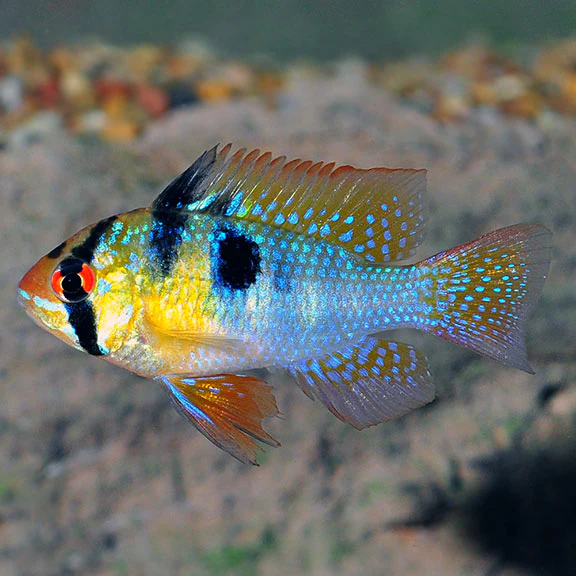
At a glance: German blue ram care
Compiled reference information. Review the care notes and original sources below.
What temperature is listed for German blue ram?
The compiled profile lists 22.2–30.0 °C for German blue ram (Mikrogeophagus ramirezi). Check the original sources below for context and differing recommendations.
What tank size is listed for German blue ram?
The profile lists a minimum tank volume of 14.3 US gallons (54.0 liters). Volume alone does not establish suitability; consider dimensions, group size and other inhabitants alongside the full care notes.
What pH is listed for German blue ram?
The compiled profile lists a pH of 4.0–7.4. Review the cited care sources alongside the other water parameters in this profile.
Natural habitat
German Blue Rams are natives of the soft, acidic waters of the Amazon Basin, specifically found in slow-moving streams and shallow regions with dense vegetation. Their natural habitat features both sand and clay substrates, providing a variety of hiding spaces and breeding surfaces within their environment. These conditions are crucial for their health and well-being in captivity.
Where they are found
Their natural environment consists of gentle tributaries and streams, which influence the water conditions they thrive in.
Aquarium care
In an aquarium, maintain a soft sandy substrate with ample hiding spots created by driftwood and plants. Regular water changes of 10-15% are advisable to keep the environment stable. Use gentle filtration to mimic natural conditions.
Feeding
As omnivores, German Blue Rams thrive on a balanced diet consisting of high-quality flakes or pellets, supplemented with occasional live or frozen foods such as brine shrimp, daphnia, and bloodworms to promote health and vibrant coloration. Feeding should be done multiple times a day in small amounts to prevent overfeeding and maintain water quality.
Compatibility
While generally peaceful, M. ramirezi may be sensitive to water quality changes. Ideal companions are small, peaceful characids. Be cautious of mixing with aggressive species or those requiring harder water.
Breeding
Breeding pairs should be kept in a minimum 20-gallon tank with appropriate water chemistry (pH 5-6.5). They engage in courtship by displaying vibrant colours and will lay eggs on smooth surfaces.
Sources
Compiled from multiple independent care sheets — not copied from a single site.