fish · Characidae
Flame tetra
Hyphessobrycon flammeus
Wild range: Southeastern Brazil (South America)
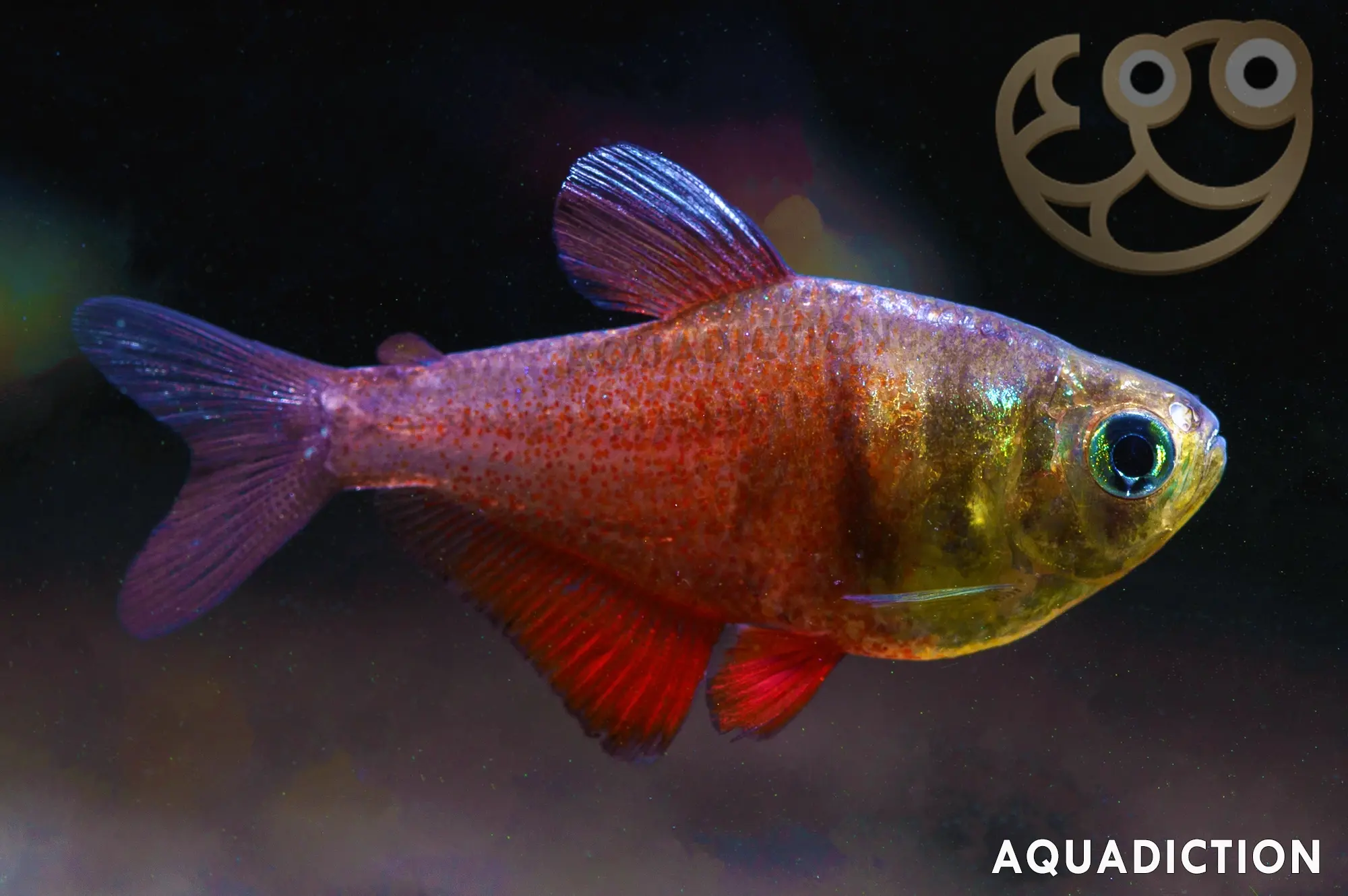
At a glance: Flame tetra care
Compiled reference information. Review the care notes and original sources below.
What temperature is listed for Flame tetra?
The compiled profile lists 18.0–29.0 °C for Flame tetra (Hyphessobrycon flammeus). Check the original sources below for context and differing recommendations.
What tank size is listed for Flame tetra?
The profile lists a minimum tank volume of 13.2 US gallons (50.0 liters). Volume alone does not establish suitability; consider dimensions, group size and other inhabitants alongside the full care notes.
What pH is listed for Flame tetra?
The compiled profile lists a pH of 5.5–7.8. Review the cited care sources alongside the other water parameters in this profile.
Natural habitat
Flame tetras inhabit shallow, slow, shaded streams in coastal drainages of southeastern Brazil, often found in areas with tannin-stained 'blackwater'. Their natural habitat is characterized by dark substrates, leaf litter, and cover from aquatic plants and driftwood, providing a safe environment in which to thrive.
Where they are found
These fish are predominantly found in the freshwater tributaries of Rio de Janeiro, where blackwater conditions prevail. The environment is rich in humic substances from decaying plant matter, which contributes to the water's acidity and color.
Aquarium care
In aquariums, Flame tetras should be kept in groups of five or more to ensure social interaction and stability. A minimum tank size of 60 cm is recommended. The aquatic setup should include gentle filtration and a well-planted environment.
Feeding
They are omnivorous micro-predators and should be fed small portions of high-quality flakes or granules, along with live or frozen foods like brine shrimp, daphnia, and finely chopped bloodworms. Including some plant matter, like spirulina or blanched greens, can help with coloring and conditioning.
Compatibility
Flame tetras are peaceful and can be kept with a variety of community fish. They thrive in a well-balanced tank environment but should not be kept with overly aggressive species.
Breeding
Breeding flame tetras is relatively straightforward for enthusiasts. Create a separate breeding tank with fine-leaf plants to facilitate spawning. Condition the prospective breeders with high-protein foods and raise the temperature slightly. After laying eggs, it is crucial to separate the fry from adult fish to prevent them from being eaten.
Sources
Compiled from multiple independent care sheets — not copied from a single site.