Catalog / fish / Flagtail catfish
fish
Flagtail catfish
Dianema urostriatum
Wild range: Amazon Basin (South America)
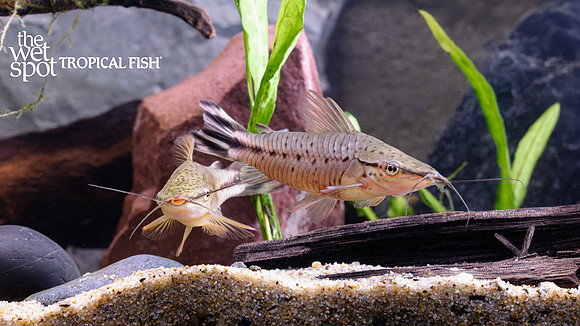
At a glance: Flagtail catfish care
Compiled reference information. Review the care notes and original sources below.
What temperature is listed for Flagtail catfish?
The compiled profile lists 22.0–37.8 °C for Flagtail catfish (Dianema urostriatum). Check the original sources below for context and differing recommendations.
What tank size is listed for Flagtail catfish?
The profile lists a minimum tank volume of 30.0 US gallons (113.6 liters). Volume alone does not establish suitability; consider dimensions, group size and other inhabitants alongside the full care notes.
What pH is listed for Flagtail catfish?
The compiled profile lists a pH of 6.0–7.5. Review the cited care sources alongside the other water parameters in this profile.
Natural habitat
The Flagtail Porthole Catfish can be found in slow-moving rivers and streams in the Amazon Basin, primarily residing among dense vegetation. They prefer slightly acidic to neutral waters with moderate to gentle flow, which mimics their natural habitat.
Where they are found
Native to Brazil and Colombia, this species thrives in environments rich in tannins due to decaying plant matter, typical of its natural habitat in the Amazon.
Aquarium care
A minimum tank size of 30 gallons is recommended for a small group. Ensure the aquarium is matured before introducing this species, as they are sensitive to ammonia and nitrite levels. Rock and driftwood decorations along with live plants are ideal for providing shelter and a natural environment.
Feeding
Dianema urostriatum is omnivorous and will accept a variety of foods. Offer high-quality pellets, flakes, frozen or live foods, such as brine shrimp and bloodworms, as well as vegetable matter to ensure a balanced diet.
Compatibility
These catfish are peaceful and can coexist with small to medium-sized fish. Tank mates should be selected carefully to avoid aggressive species that may bully them.
Breeding
Breeding may be challenging and requires a separate tank that mimics natural conditions. Provide fine-leaved plants for egg deposition, and ensure the water temperature is around 27°C.
Sources
Compiled from multiple independent care sheets — not copied from a single site.