Catalog / fish / Five-banded barb
fish · Cyprinidae
Five-banded barb
Puntigrus partipentazona
Wild range: Southeast Asia (Asia)
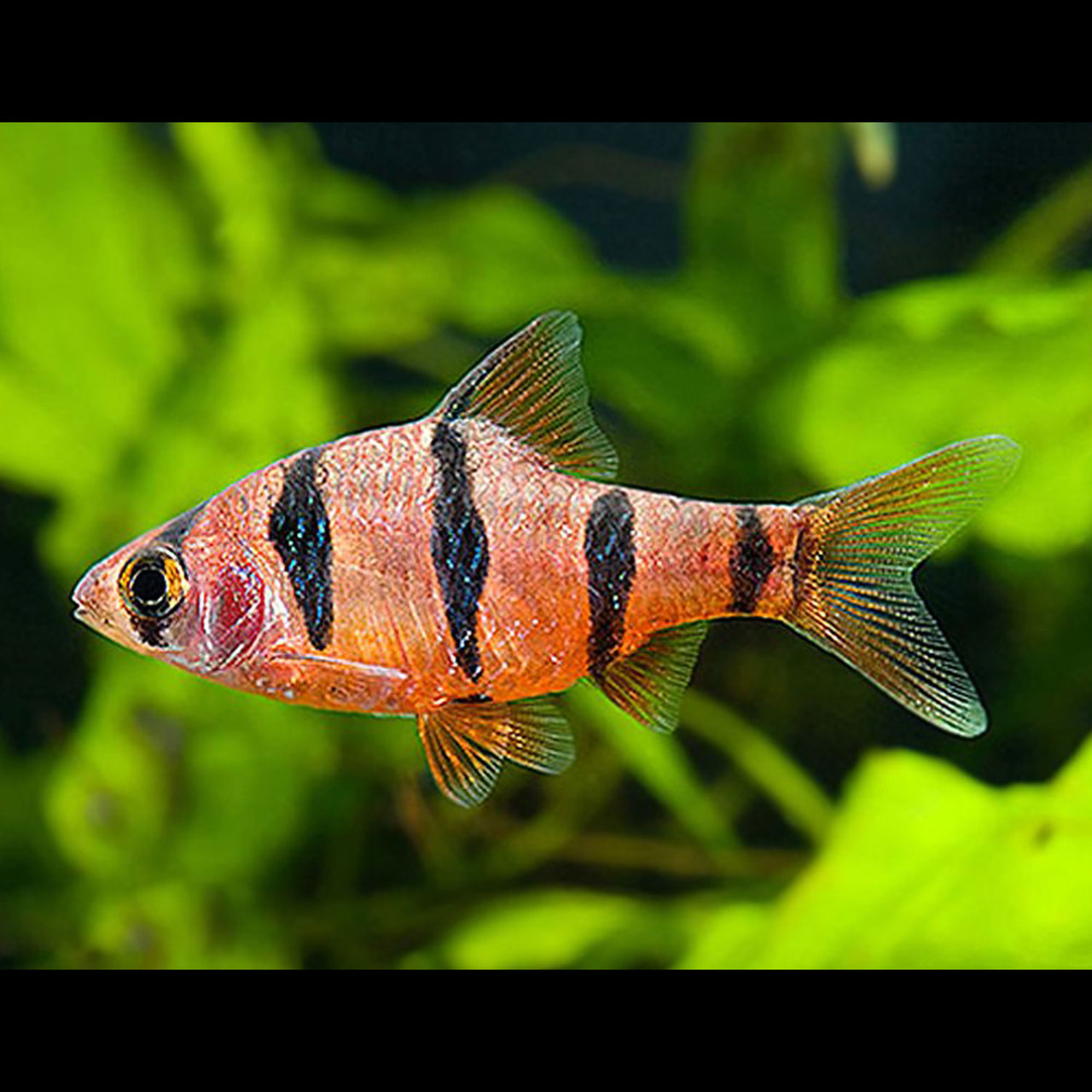
At a glance: Five-banded barb care
Compiled reference information. Review the care notes and original sources below.
What temperature is listed for Five-banded barb?
The compiled profile lists 22.0–26.7 °C for Five-banded barb (Puntigrus partipentazona). Check the original sources below for context and differing recommendations.
What tank size is listed for Five-banded barb?
The profile lists a minimum tank volume of 20.0 US gallons (75.7 liters). Volume alone does not establish suitability; consider dimensions, group size and other inhabitants alongside the full care notes.
What pH is listed for Five-banded barb?
The compiled profile lists a pH of 4.0–7.5. Review the cited care sources alongside the other water parameters in this profile.
Natural habitat
The Pentazona Barb thrives in slow-moving forest streams and peat swamps characterized by soft, slightly acidic water rich in leaf litter and tannins. They prefer environments with ample hiding spots provided by plants and wood.
Where they are found
This species is primarily found in the Kalimantan region of Borneo, where it is commonly seen in groups. The fish prefers habitats rich in leaf litter and submerged plants, which are essential for both food and shelter.
Aquarium care
For successful aquarium care, it's crucial to maintain soft, acidic water conditions with a pH below 7. Regular water changes and the potential use of reverse osmosis water may be necessary. Ensure plenty of swimming space and vegetation for shelter, as these barbs are less boisterous and enjoy hiding among plants.
Feeding
Pentazona Barbs are omnivorous and thrive on a varied diet of high-quality flakes or pellets supplemented by live or frozen foods like daphnia or brine shrimp. It's important to feed small amounts to prevent overfeeding and maintain water quality.
Compatibility
The five banded barb is a peaceful community fish that does well with various tank mates from similar regions. Suitable companions include small tetras, other barbs like the snakeskin barb, and peaceful bottom dwellers such as corydoras and loaches. It's advisable to avoid overly aggressive species like certain cichlids or larger fish that may intimidate them.
Breeding
Breeding Five-Banded Barbs in captivity can be challenging, but it is possible with the right setup. To trigger breeding, raise the temperature slightly and provide dense vegetation for them to spawn. The eggs are likely to hatch in about 24-48 hours, after which the fry should be fed with infusoria or liquid fry food until they are large enough for baby brine shrimp.
Sources
Compiled from multiple independent care sheets — not copied from a single site.