fish · Tetraodontidae
Figure-eight puffer
Dichotomyctere ocellatus
Wild range: Southeast Asia (Asia)
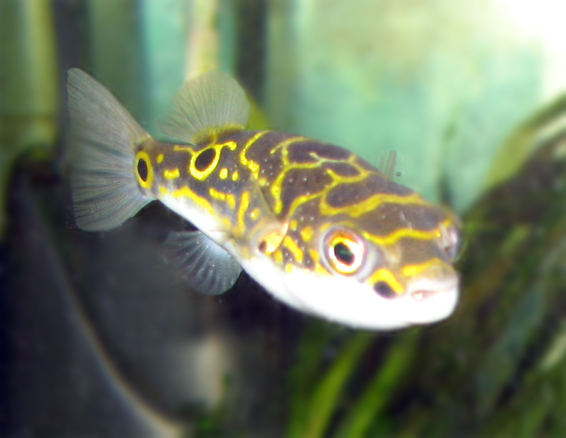
At a glance: Figure-eight puffer care
Compiled reference information. Review the care notes and original sources below.
What temperature is listed for Figure-eight puffer?
The compiled profile lists 22.0–26.0 °C for Figure-eight puffer (Dichotomyctere ocellatus). Check the original sources below for context and differing recommendations.
What tank size is listed for Figure-eight puffer?
The profile lists a minimum tank volume of 10.0 US gallons (37.9 liters). Volume alone does not establish suitability; consider dimensions, group size and other inhabitants alongside the full care notes.
What pH is listed for Figure-eight puffer?
The compiled profile lists a pH of 6.5–8.0. Review the cited care sources alongside the other water parameters in this profile.
Natural habitat
Pufferfish inhabit a variety of freshwater environments, primarily found in rivers and lakes across Southeast Asia. They prefer areas with plenty of vegetation and hiding spots, where they can retreat when threatened.
Where they are found
While this species is often sold in freshwater, it naturally inhabits brackish waters, which are important for its health and immune system. It's critical for hobbyists to replicate these conditions to avoid health issues.
Aquarium care
To maintain a healthy aquarium for the Figure 8 Puffer, provide a minimum tank size of 10 gallons with plenty of hiding spaces created by rocks, driftwood, or plants. The tank should have a soft substrate, and the pH should be maintained between 7.0 and 7.5. Gentle water flow is preferred, allowing the fish to swim comfortably.
Feeding
Pufferfish are omnivorous and should be fed a varied diet that includes high-quality pellets, live or frozen foods like shrimp and snails, along with greens to keep them healthy. Avoid overly soft foods, as they need to wear down their teeth.
Compatibility
These puffers can be somewhat aggressive, especially if they feel threatened or are not adequately fed. They are best kept alone or with very peaceful tank mates. Care should be taken when introducing them to community tanks, as their temperament may change as they mature.
Breeding
Breeding in captivity has not been documented, and most figure 8 puffers available are wild-caught. They may carry internal parasites, warranting treatment when introducing them to an aquarium.
Sources
Compiled from multiple independent care sheets — not copied from a single site.