Catalog / fish / Featherfin catfish
fish · Mochokidae
Featherfin catfish
Synodontis eupterus
Wild range: Zaire, Chad, Cameroon (Africa)
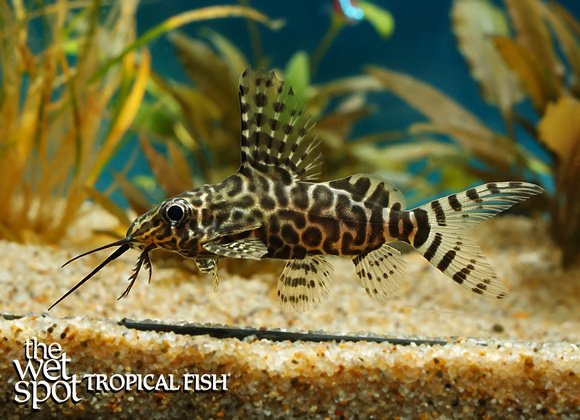
At a glance: Featherfin catfish care
Compiled reference information. Review the care notes and original sources below.
What temperature is listed for Featherfin catfish?
The compiled profile lists 22.0–29.0 °C for Featherfin catfish (Synodontis eupterus). Check the original sources below for context and differing recommendations.
What tank size is listed for Featherfin catfish?
The profile lists a minimum tank volume of 53.0 US gallons (200.0 liters). Volume alone does not establish suitability; consider dimensions, group size and other inhabitants alongside the full care notes.
What pH is listed for Featherfin catfish?
The compiled profile lists a pH of 6.0–8.5. Review the cited care sources alongside the other water parameters in this profile.
Natural habitat
The Featherfin Catfish is native to the rocky river basins of Africa, thriving in environments that offer soft sand or gravel substrates. This species prefers well-oxygenated water conditions, replicating its natural habitat, and appreciates strong water flow to stimulate its natural behaviors. Proper maintenance of pH and temperature is crucial for their overall health.
Where they are found
This species is native to the Congo River basin in Central Africa, often inhabiting areas with plenty of hiding spots. Their natural population distribution is not only limited to lakes and rivers but also includes floodplains where they can thrive during seasonal changes.
Aquarium care
To maintain the health of the Featherfin Catfish, provide a spacious aquarium with a soft sandy substrate, rocks, and hiding spots. Regular water changes and filtration are essential to control waste and maintain water quality. Ensure that the fish has enough space to swim and explore its environment.
Feeding
Featherfin Catfish are omnivores and enjoy a varied diet consisting of sinking pellets, algae wafers, and occasional frozen foods such as bloodworms. Feeding should occur daily, with attention given to their scavenging tendencies on the substrate, helping to enhance their natural vibrancy.
Compatibility
Ideal tankmates include peaceful fish that exceed 5 cm, such as Barbs, Gouramis, and medium-sized Tetras. Avoid aggressive species and those from Lake Malawi or Tanganyika to prevent stress and territorial disputes.
Breeding
Breeding Synodontis eupterus in captivity can be challenging. They are egg layers and may require a separate breeding tank with appropriate conditions. Conditioned pairs should be provided with plenty of hiding spaces to encourage spawning. After mating, the eggs are often scattered, usually among plants or substrate.
Sources
Compiled from multiple independent care sheets — not copied from a single site.