Catalog / fish / Exclamation-point rasbora
fish · Cyprinidae
Exclamation-point rasbora
Boraras urophthalmoides
Wild range: Southeast Asia (Asia)
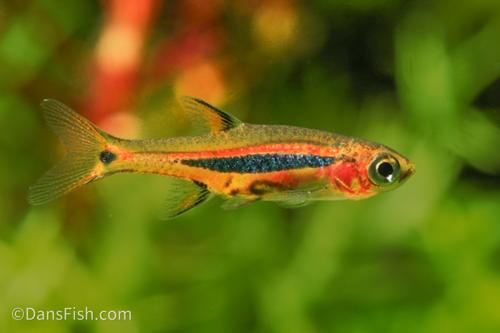
At a glance: Exclamation-point rasbora care
Compiled reference information. Review the care notes and original sources below.
What temperature is listed for Exclamation-point rasbora?
The compiled profile lists 21.0–28.0 °C for Exclamation-point rasbora (Boraras urophthalmoides). Check the original sources below for context and differing recommendations.
What tank size is listed for Exclamation-point rasbora?
The profile lists a minimum tank volume of 5.5 US gallons (20.0 liters). Volume alone does not establish suitability; consider dimensions, group size and other inhabitants alongside the full care notes.
What pH is listed for Exclamation-point rasbora?
The compiled profile lists a pH of 5.5–8.3. Review the cited care sources alongside the other water parameters in this profile.
Natural habitat
The Least rasbora is predominantly found in southern Thailand, specifically in the Sai Buri river of Pattani province, as well as in central Thailand. It thrives in swamps, marshes, and ponds characterized by clear water and abundant aquatic vegetation. During the wet season, these fish may migrate to flooded areas.
Where they are found
The fish is primarily located in shallow water habitats characterized by dense vegetation and low water exchange, making it adapted to slow-moving environments.
Aquarium care
To care for the Exclamation Point Rasbora, maintain a well-planted aquarium with gentle water flow. Ensure the water parameters are stable rather than matching specific values. Providing a varied diet will help promote health and vitality.
Feeding
For optimal health and coloration, feed the Least rasbora a varied diet including high-quality dried foods such as small pellets and flakes, supplemented with live or frozen foods like Daphnia and brine shrimp to enhance their vibrancy and well-being.
Compatibility
The Exclamation Point Rasbora is a peaceful species that thrives in groups. Ensure tankmates are similarly gentle to prevent stress. Suitable companions include small tetras and other peaceful freshwater species.
Breeding
Breeding occurs readily in captive settings when conditions are ideal, specifically with water temperatures at around 25–26 °C and soft acidic water. Once eggs are laid, separating the parents is necessary to prevent them from eating the eggs.
Sources
Compiled from multiple independent care sheets — not copied from a single site.