Catalog / invertebrates / European nerite
invertebrate · Neritidae
European nerite
Theodoxus fluviatilis
Wild range: Western Asia (Europe)
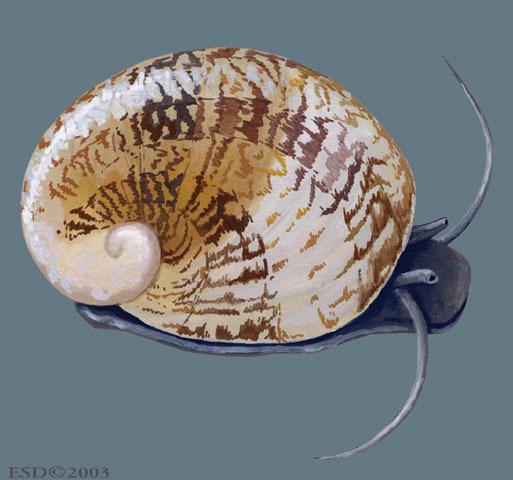
At a glance: European nerite care
Compiled reference information. Review the care notes and original sources below.
What temperature is listed for European nerite?
The compiled profile lists 10.0–26.0 °C for European nerite (Theodoxus fluviatilis). Check the original sources below for context and differing recommendations.
What tank size is listed for European nerite?
The profile lists a minimum tank volume of 1.6 US gallons (6.0 liters). Volume alone does not establish suitability; consider dimensions, group size and other inhabitants alongside the full care notes.
What pH is listed for European nerite?
The compiled profile lists a pH of 6.5–8.5. Review the cited care sources alongside the other water parameters in this profile.
Natural habitat
The river nerite Theodoxus fluviatilis predominantly inhabits freshwater and brackish waters across Europe and Western Asia, typically found in shallow waters with hard substrates. It is equipped to adapt to salinity changes, displaying significant euryhaline behavior.
Where they are found
This freshwater snail species occurs predominantly in the Palearctic region, with common sightings in parts of Europe and southwestern Asia. Its distribution is fragmented, as many high-altitude areas remain uninhabited by this species.
Aquarium care
Theodoxus snails are relatively easy to care for, thriving in established tanks with stable water parameters. Regular monitoring and maintenance are necessary, particularly concerning calcium levels to support shell development. They prefer water with a hardness above 12 dGH and a pH between 7.0 and 8.5.
Feeding
This species primarily feeds on diatoms and algae. Supplementing their diet with cultured diatoms or algae is advisable in a captive setting to ensure adequate nutrition.
Compatibility
Theodoxus snails are peaceful and can coexist in community tanks with other calm fish and invertebrates. They should be kept away from aggressive species like cichlids and crayfish, which may harm them. Their small size makes them suitable for nano tanks, but care should be taken regarding larger, predatory tank mates.
Breeding
Breeding occurs between April and October, with females laying eggs on hard surfaces. The fertilization is internal and the eggs are generally calcified, potentially attached to the female's shell for protection.
Sources
Compiled from multiple independent care sheets — not copied from a single site.