Catalog / fish / Lambchop rasbora
fish · Cyprinidae
Lambchop rasbora
Trigonostigma espei
Wild range: Southeast Asia (Asia)
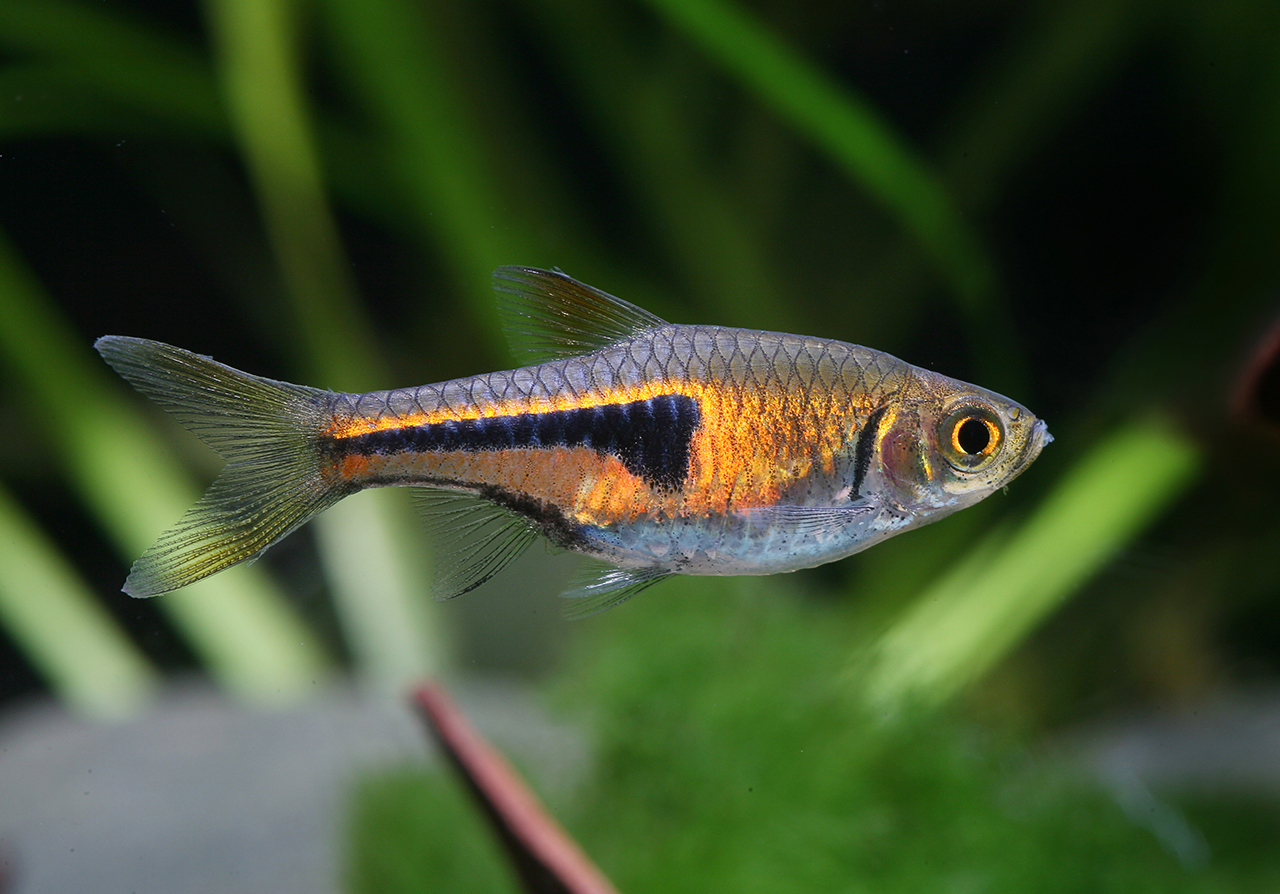
At a glance: Lambchop rasbora care
Compiled reference information. Review the care notes and original sources below.
What temperature is listed for Lambchop rasbora?
The compiled profile lists 22.0–28.0 °C for Lambchop rasbora (Trigonostigma espei). Check the original sources below for context and differing recommendations.
What tank size is listed for Lambchop rasbora?
The profile lists a minimum tank volume of 10.0 US gallons (38.0 liters). Volume alone does not establish suitability; consider dimensions, group size and other inhabitants alongside the full care notes.
What pH is listed for Lambchop rasbora?
The compiled profile lists a pH of 5.5–7.5. Review the cited care sources alongside the other water parameters in this profile.
Natural habitat
Trigonostigma espei inhabits gently flowing forest streams, characterized by warm, acidic waters with organic debris creating a dimly-lit environment. This species thrives among dense aquatic vegetation, requiring a setup that mimics its natural habitat for optimum health.
Where they are found
Lambchop Rasboras are typically found in shallow waters characterized by rich vegetation and organic debris, which helps to mimic a shaded and calm environment. This species is accustomed to more tropical climate conditions that maintain stable warm temperatures and slightly acidic water.
Aquarium care
For optimal care, a well-cycled aquarium with stable water parameters is essential. Introduce at least six individuals for proper schooling behavior and to minimize stress. Use a gentle filter to maintain water quality and avoid strong currents.
Feeding
This species is a micropredator in the wild but adapts easily to tropical flake foods in captivity. Regular offerings of small live and frozen foods such as Daphnia and bloodworms are essential for their vibrant coloration and health.
Compatibility
These fish are generally peaceful and get along well with other community species like bettas and various tetras. They should be kept in groups to ensure they feel secure and thrive.
Breeding
Breeding Lambchop Rasboras can be somewhat difficult since they require specific environmental conditions. A separate spawning tank with dim lighting and broad-leaved plants where females can lay eggs is recommended. After spawning, the adult fish should be removed to prevent them from eating the eggs. The eggs typically hatch within 24-36 hours, and the fry should be fed with infusoria or finely crushed flake food.
Sources
Compiled from multiple independent care sheets — not copied from a single site.