fish · Osphronemidae
Betta enisae
Betta enisae
Wild range: Borneo (Asia)
At a glance: Betta enisae care
Compiled reference information. Review the care notes and original sources below.
What temperature is listed for Betta enisae?
The compiled profile lists 22.0–28.0 °C for Betta enisae (Betta enisae). Check the original sources below for context and differing recommendations.
What tank size is listed for Betta enisae?
The profile lists a minimum tank volume of 15.9 US gallons (60.0 liters). Volume alone does not establish suitability; consider dimensions, group size and other inhabitants alongside the full care notes.
What pH is listed for Betta enisae?
The compiled profile lists a pH of 5.0–7.0. Review the cited care sources alongside the other water parameters in this profile.
Natural habitat
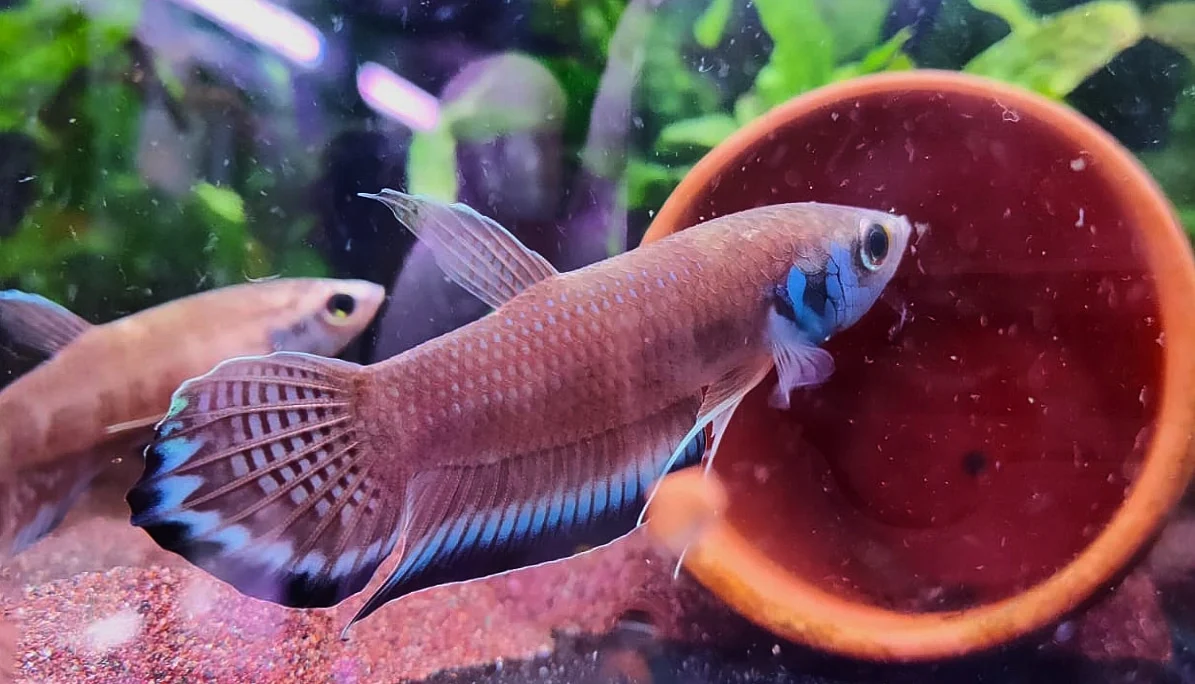
The Blue band betta is native to the slow-moving waters of Borneo, adapting well to various water conditions including typical tap water. These fish thrive in environments that allow for ample hiding spaces such as sunken pots and pipes.
Where they are found
This species is native to the Kapuas River Basin, where it is often found alongside other aquatic and semi-aquatic species.
Aquarium care
For optimal care, the Blue band betta should be housed in a larger tank with a capacity of at least 60 liters. The aquarium should include plenty of hiding spaces and territories as these fish pair up and exhibit territoriality, particularly when breeding.
Feeding
Enisae Betta will accept a variety of foods including high-quality pellets, frozen or live food such as blackworms and daphnia. It's crucial to ensure a varied diet to promote good health.
Compatibility
Enisae Betta can be kept in community setups with other peaceful species but may show aggressive behaviors towards their own kind if not kept in appropriate numbers. Provide sufficient space and hiding spots to prevent conflict.
Breeding
Breeding involves the female enticing the male by swimming in front of him to guide him to a chosen spawning site. The process includes mating rituals where eggs are exchanged, and the male mouthbroods the eggs for two to three weeks before they hatch into fry.
Sources
Compiled from multiple independent care sheets — not copied from a single site.