Catalog / fish / Emperor tetra
fish · Characidae
Emperor tetra
Nematobrycon palmeri
Wild range: Colombia and Brazil (South America)
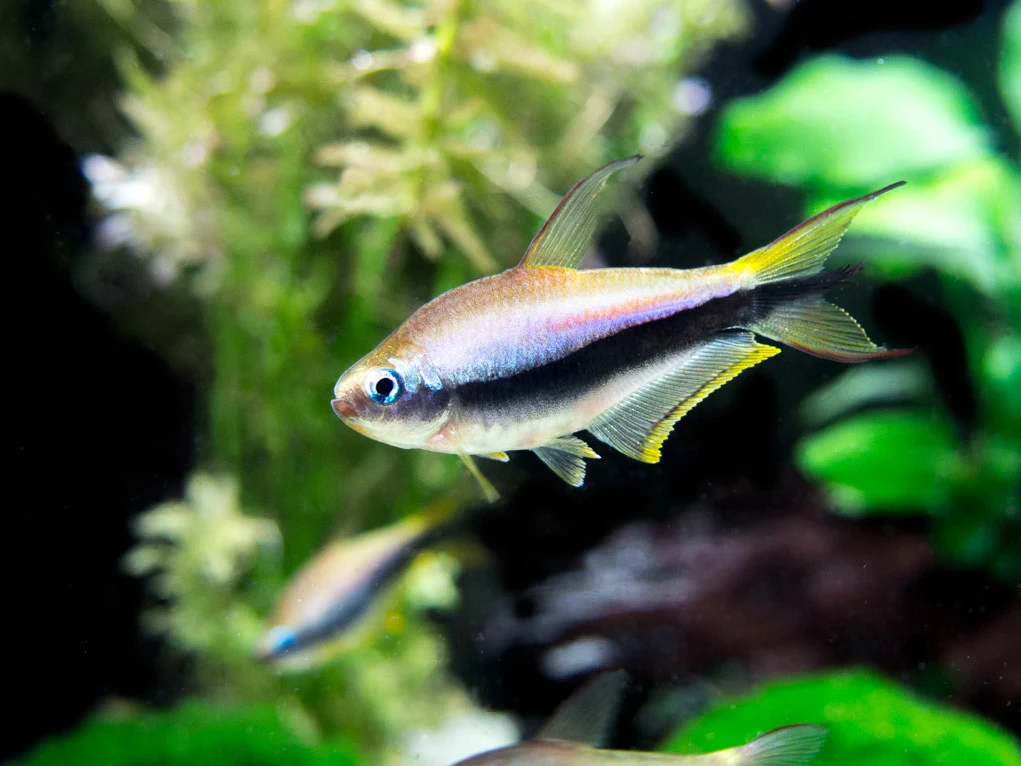
At a glance: Emperor tetra care
Compiled reference information. Review the care notes and original sources below.
What temperature is listed for Emperor tetra?
The compiled profile lists 22.0–27.0 °C for Emperor tetra (Nematobrycon palmeri). Check the original sources below for context and differing recommendations.
What tank size is listed for Emperor tetra?
The profile lists a minimum tank volume of 20.0 US gallons (75.0 liters). Volume alone does not establish suitability; consider dimensions, group size and other inhabitants alongside the full care notes.
What pH is listed for Emperor tetra?
The compiled profile lists a pH of 5.0–7.8. Review the cited care sources alongside the other water parameters in this profile.
Natural habitat
The Emperor Tetra is typically found in serene and clear watercourses, minor tributaries, and backwaters characterized by sandy, rocky, or silty substrates. They flourish in water conditions that are soft and slightly acidic, often inhabiting tranquil parts of rivers such as the San Juan and Atrato River Basins in Colombia.
Where they are found
These tetras are native to south America specifically Colombia, where they are found in freshwater environments like rivers and streams that are characterized by moderate flow and plant life.
Aquarium care
These fish require a well-planted tank with adequate swimming space. Ideal tank mates include other small and peaceful species that share similar water parameter needs. Overcrowding with male Emperor Tetras may lead to sparring, so a higher ratio of females to males is advisable.
Feeding
Emperor Tetras thrive on a varied diet; while they can consume dried foods, it is important to supplement their diet with small frozen or live foods like Artemia, Brine Shrimp, and Daphnia. This dietary diversity helps improve their coloration and overall vitality.
Compatibility
These tetras are social and prefer to be in groups. They are peaceful and can reside with other community fish such as Corydoras, small tetras, and dwarf cichlids. Care should be taken not to house them with aggressive species.
Breeding
Breeding emperor tetras requires a group of around 6 to 10 individuals. The fish are egg scatterers and typically need soft, slightly warm water for spawning. It is advisable to use a spawning mop or fine-leaved plants for egg laying. Remove the adults after spawning to protect the eggs, which hatch in about 24 to 48 hours.
Sources
Compiled from multiple independent care sheets — not copied from a single site.