Catalog / invertebrates / Emerald crayfish
invertebrate · Parastacidae
Emerald crayfish
Cherax snowden
Wild range: Irian Jaya (Australia)
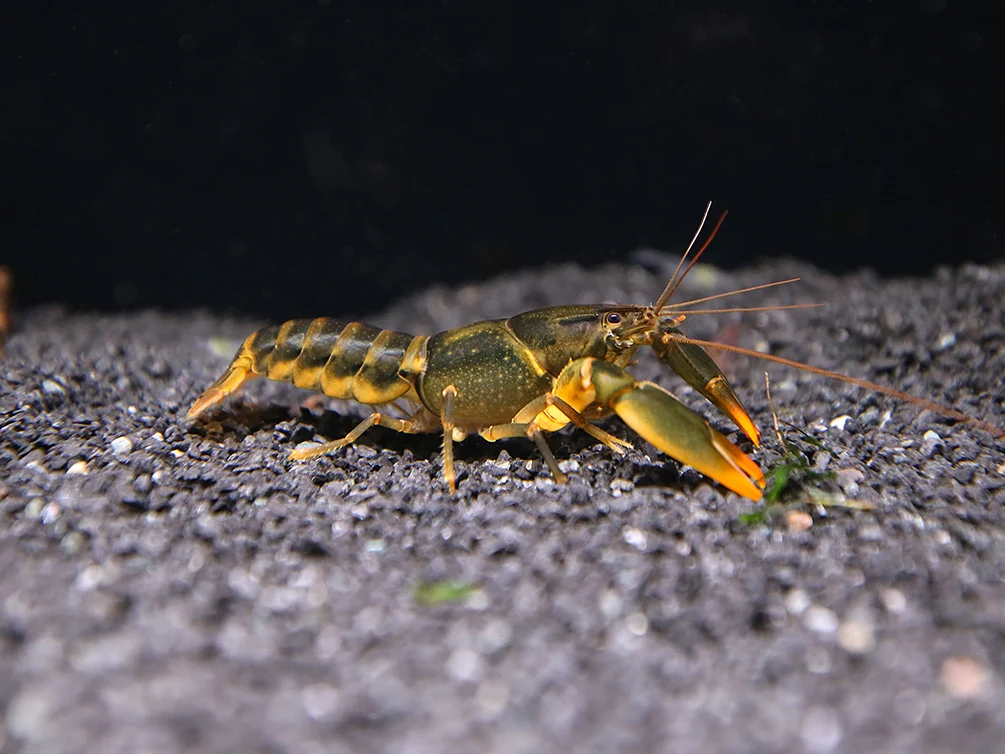
At a glance: Emerald crayfish care
Compiled reference information. Review the care notes and original sources below.
What temperature is listed for Emerald crayfish?
The compiled profile lists 21.0–31.0 °C for Emerald crayfish (Cherax snowden). Check the original sources below for context and differing recommendations.
What tank size is listed for Emerald crayfish?
The profile lists a minimum tank volume of 20.0 US gallons (80.0 liters). Volume alone does not establish suitability; consider dimensions, group size and other inhabitants alongside the full care notes.
What pH is listed for Emerald crayfish?
The compiled profile lists a pH of 6.0–8.0. Review the cited care sources alongside the other water parameters in this profile.
Natural habitat
Cherax snowden is found in tributary creeks to the Oinsok River, recognized for their shallow depths (20-60 cm), moderate flow, and clear water. The substrate typically consists of silt, stones, and larger rocks, with an absence of water plants in most parts.
Where they are found
This species is endemic to Papua New Guinea and is usually found in rivers with a strong current.
Aquarium care
Creating a suitable environment for Cherax boesemani requires a minimum tank size of 80 liters, with appropriate hiding spots using structures like PVC pipes or driftwood. Regular water changes of 15-20% weekly are crucial for maintaining water quality.
Feeding
Cherax snowden requires a varied diet, including commercial pellets, vegetables, and occasional protein sources such as fish or shrimp. Feeding should be done several times a week, ensuring leftovers are removed to prevent water quality deterioration.
Compatibility
This species is best kept alone or in groups of one male to one or two females due to their territorial nature. Housing with slow-moving fish or other crayfish species is discouraged.
Breeding
Breeding in captivity is possible with appropriate water conditions. Females carry eggs under their abdomen and give birth to fully formed juveniles. Careful preparation of the tank environment helps facilitate breeding.
Sources
Compiled from multiple independent care sheets — not copied from a single site.