Catalog / fish / Emerald corydoras
fish · Callichthyidae
Emerald corydoras
Brochis splendens
Wild range: Amazon River basin (South America)
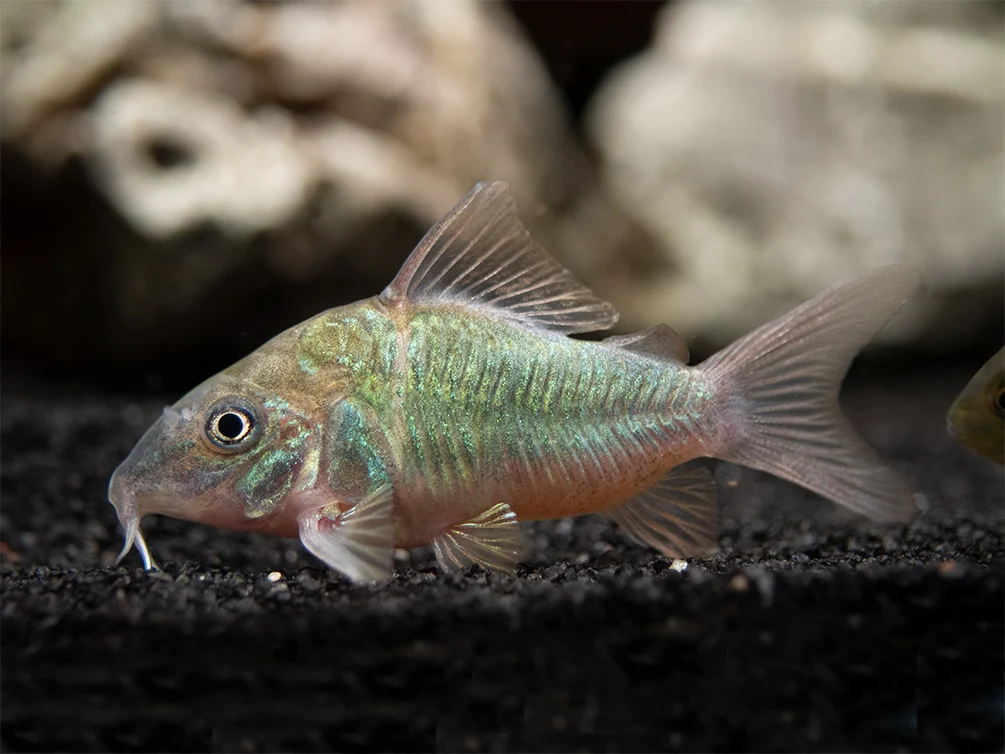
At a glance: Emerald corydoras care
Compiled reference information. Review the care notes and original sources below.
What temperature is listed for Emerald corydoras?
The compiled profile lists 20.0–28.0 °C for Emerald corydoras (Brochis splendens). Check the original sources below for context and differing recommendations.
What tank size is listed for Emerald corydoras?
The profile lists a minimum tank volume of 31.7 US gallons (120.0 liters). Volume alone does not establish suitability; consider dimensions, group size and other inhabitants alongside the full care notes.
What pH is listed for Emerald corydoras?
The compiled profile lists a pH of 5.0–8.0. Review the cited care sources alongside the other water parameters in this profile.
Natural habitat
Emerald Catfish are found in the warm, soft waters of the Amazon River basin. They prefer environments with dense vegetation, which provide both shelter and foraging opportunities. Mimicking these conditions in the aquarium is essential for their well-being, including stable water parameters and suitable tank mates.
Where they are found
Primarily found in the Amazon River Basin, the Emerald Catfish inhabit still or slow-moving waters that are rich in vegetation, providing ample cover and food sources.
Aquarium care
Stable water conditions are vital for Emerald Catfish. Maintain a temperature between 20°C and 28°C, with a pH range of 5.0 to 8.0. The tank should feature soft substrate to prevent injury to their barbels and ample hiding places to mimic their natural habitat. Regular monitoring and weekly water changes of 10-20% is necessary to ensure a healthy environment.
Feeding
Emerald Catfish are not picky eaters; they enjoy sinking catfish pellets, flakes, granules, and various frozen foods such as brine shrimp and mosquito larvae.
Compatibility
Emerald Catfish are peaceful and can be housed in community tanks with other non-aggressive species. They enjoy companionship and should be kept in groups to display natural behaviors.
Breeding
Breeding occurs when males display courtship behaviors towards females, which involve chasing and dancing to encourage spawning on flat surfaces. After egg deposition, it's essential to remove the parents to prevent them from consuming their eggs.
Sources
Compiled from multiple independent care sheets — not copied from a single site.