fish · Characidae
Ember tetra
Hyphessobrycon amandae
Wild range: Brazil (South America)
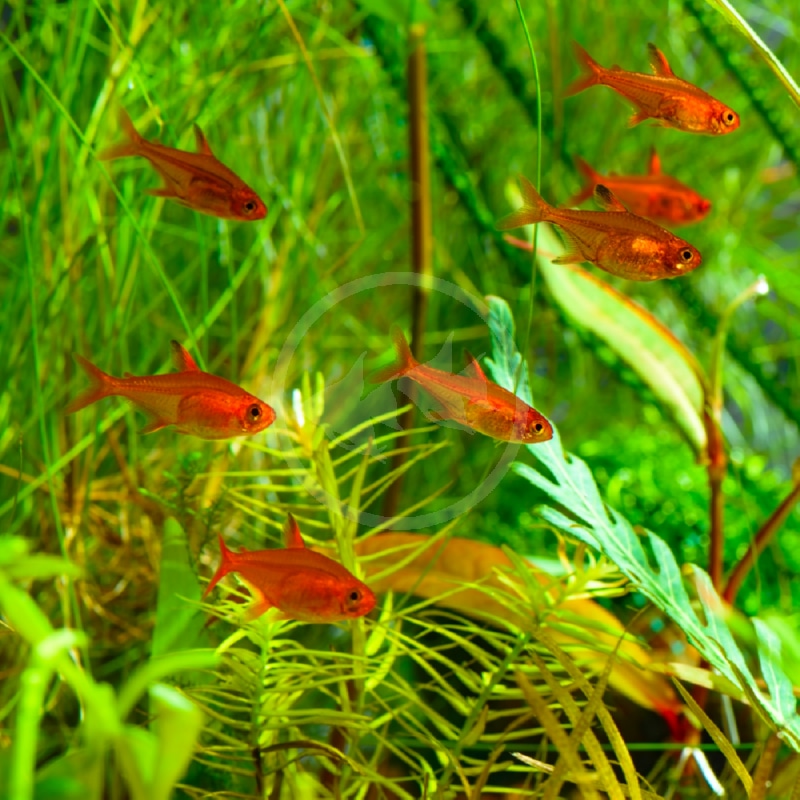
At a glance: Ember tetra care
Compiled reference information. Review the care notes and original sources below.
What temperature is listed for Ember tetra?
The compiled profile lists 22.0–29.0 °C for Ember tetra (Hyphessobrycon amandae). Check the original sources below for context and differing recommendations.
What tank size is listed for Ember tetra?
The profile lists a minimum tank volume of 10.0 US gallons (37.9 liters). Volume alone does not establish suitability; consider dimensions, group size and other inhabitants alongside the full care notes.
What pH is listed for Ember tetra?
The compiled profile lists a pH of 5.0–7.5. Review the cited care sources alongside the other water parameters in this profile.
Natural habitat
Ember tetras are found in the lower Amazon basin, specifically in the Araguaia River basin. They thrive in densely planted environments with driftwood and leaf litter, replicating their natural habitat and helping to reduce stress levels.
Where they are found
These fish thrive in warm water with a soft, acidic pH, often found in densely vegetated regions of their native range.
Aquarium care
Maintaining water quality is essential for ember tetras. Regular water changes of 15-30% weekly are recommended, along with monitoring temperature and water conditions. Providing a tank with plants and proper filtration will create a suitable habitat.
Feeding
Ember tetras are omnivores preferring small-sized food pellets, flakes, and a variety of live and frozen foods. They should be fed small portions multiple times a day due to their small mouth size. Feeding should also be adjusted based on the fish's activity levels and growth stages.
Compatibility
Ember tetras are peaceful and make excellent community fish. They thrive in groups of at least six and can live harmoniously with other small, non-aggressive species like guppies and cherry barbs, though they should be avoided with larger, aggressive fish.
Breeding
Breeding Ember Tetras can be achieved by setting up a separate breeding tank with fine-leaved plants where they can scatter their eggs. The eggs typically hatch within a few days, and the baby fish should be fed infusoria or other microfoods until they're large enough to accept regular food.
Sources
Compiled from multiple independent care sheets — not copied from a single site.