Catalog / fish / Einthoven's rasbora
fish · Cyprinidae
Einthoven's rasbora
Rasbora einthovenii
Wild range: Southeast Asia (Asia)
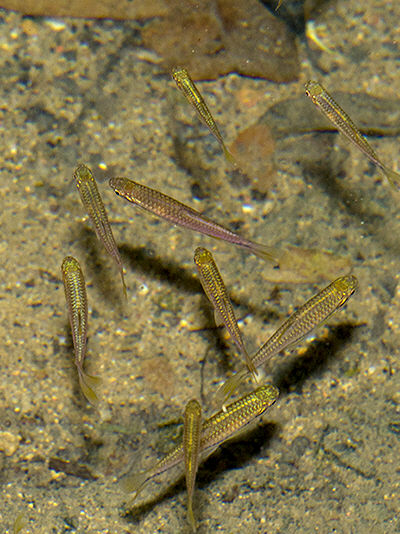
At a glance: Einthoven's rasbora care
Compiled reference information. Review the care notes and original sources below.
What temperature is listed for Einthoven's rasbora?
The compiled profile lists 22.8–27.8 °C for Einthoven's rasbora (Rasbora einthovenii). Check the original sources below for context and differing recommendations.
What tank size is listed for Einthoven's rasbora?
The profile lists a minimum tank volume of 10.0 US gallons (38.0 liters). Volume alone does not establish suitability; consider dimensions, group size and other inhabitants alongside the full care notes.
What pH is listed for Einthoven's rasbora?
The compiled profile lists a pH of 5.0–7.8. Review the cited care sources alongside the other water parameters in this profile.
Natural habitat
Rasbora einthovenii is native to the tropical waters of the Malay Peninsula, Sumatra, and Borneo. These environments typically feature slow-moving rivers and streams with dense vegetation, where the fish find cover among plants and debris.
Where they are found
Rasboras thrive in regions where the water is soft, slightly acidic, and possesses substantial plant growth, especially during the wet season when floodplains provide ample spawning grounds.
Aquarium care
This species thrives in a well-planted aquarium with swimming space and gentle water flow. A minimum tank size of 30 gallons is recommended to accommodate their schooling behavior. Maintaining stable water conditions is crucial for their health.
Feeding
Rasboras are versatile feeders, thriving on a varied diet that includes quality flake foods and live or frozen treats. Portion size should be regulated to ensure they consume all food within 2 to 3 minutes to avoid waste.
Compatibility
Rasboras are generally peaceful and do well in community tanks with similarly sized fish. They thrive with small tetras, peaceful loaches, and various bottom dwellers to create a diverse aquatic environment.
Breeding
Breeding can be challenging but is possible in a separate spawning tank with subdued lighting and soft, slightly acidic water. Provide dense vegetation for egg-laying.
Sources
Compiled from multiple independent care sheets — not copied from a single site.