plant · Hydrocharitaceae
Anacharis
Egeria densa
Wild range: Argentina, Paraguay, Uruguay, Brazil (South America)
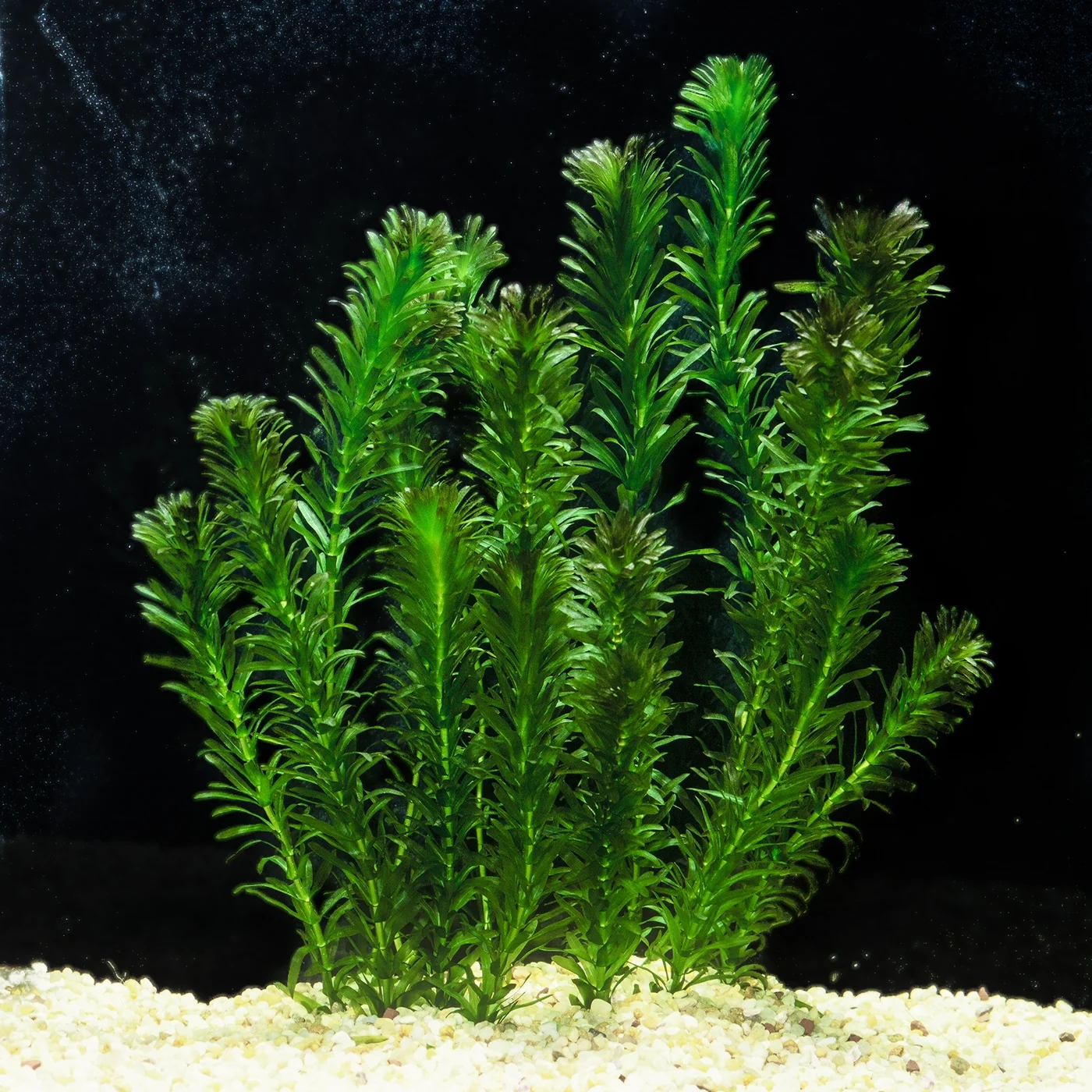
At a glance: Anacharis care
Compiled reference information. Review the care notes and original sources below.
What temperature is listed for Anacharis?
The compiled profile lists 15.0–28.0 °C for Anacharis (Egeria densa). Check the original sources below for context and differing recommendations.
What tank size is listed for Anacharis?
The profile lists a minimum tank volume of 10.0 US gallons (40.0 liters). Volume alone does not establish suitability; consider dimensions, group size and other inhabitants alongside the full care notes.
What pH is listed for Anacharis?
The compiled profile lists a pH of 6.0–8.0. Review the cited care sources alongside the other water parameters in this profile.
Natural habitat
Egeria densa is primarily found in freshwater systems across South America, thriving in a variety of aquatic environments such as rivers, lakes, and ponds. It favors regions with ample light and nutrient-rich substrates.
Where they are found
The native range of Anacharis extends through the freshwater bodies of Brazil, where its robust growth contributes significantly to the aquatic ecosystem.
Aquarium care
In the aquarium, Egeria densa requires moderate lighting and will thrive without additional CO2 injection. It should ideally be planted in nutrient-rich substrate and requires regular trimming to promote bushy growth.
Feeding
While Egeria densa is a plant, its presence in the aquarium helps maintain water quality, providing oxygen and absorbing nutrients, thus indirectly benefitting fish and other aquatic life. It does not require direct feeding but will benefit from nutrient-rich water conditions.
Compatibility
Egeria densa is safe with a wide variety of fish and inverts, providing shelter and absorbing impurities. Its fast growth helps combat algae, making it an excellent addition to community tanks.
Breeding
Propagation is easily achieved through stem cuttings. Simply trim a healthy stem and replant it in substrate or allow it to float; new growth will sprout quickly from the nodes.
Sources
Compiled from multiple independent care sheets — not copied from a single site.