Catalog / fish / Edith's betta
fish · Osphronemidae
Edith's betta
Betta edithae
Wild range: Southeast Asia (Asia)
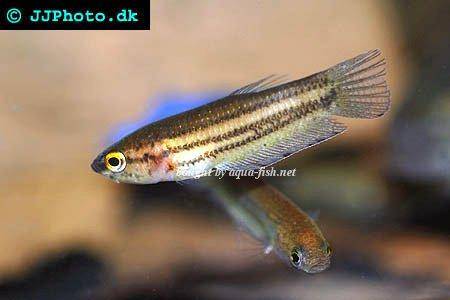
At a glance: Edith's betta care
Compiled reference information. Review the care notes and original sources below.
What temperature is listed for Edith's betta?
The compiled profile lists 22.2–28.0 °C for Edith's betta (Betta edithae). Check the original sources below for context and differing recommendations.
What tank size is listed for Edith's betta?
The profile lists a minimum tank volume of 1.0 US gallons (3.8 liters). Volume alone does not establish suitability; consider dimensions, group size and other inhabitants alongside the full care notes.
What pH is listed for Edith's betta?
The compiled profile lists a pH of 5.5–7.5. Review the cited care sources alongside the other water parameters in this profile.
Natural habitat
Betta fish are typically found in shallow, slow-moving waters of Southeast Asia, predominantly in rice paddies, floodplains, and marshes, where they inhabit dense vegetation and thrive in lower water conditions.
Where they are found
This species is commonly found in freshwater habitats such as swamps and marshes across Borneo, Sumatra, and Malaysia. They thrive in environments that mimic their natural habitats with dense planting.
Aquarium care
In captivity, they thrive in a well-planted tank with subdued lighting and plenty of hiding spaces. Maintain good water quality and avoid strong currents, as they prefer calmer waters. Regular water changes, ideally 25% weekly, help keep the fish healthy.
Feeding
A balanced diet for bettas consists of high-quality pellets, freeze-dried bloodworms, and occasional treats like brine shrimp. Overfeeding should be avoided, with daily feedings limited to what they can consume in a couple of minutes.
Compatibility
Best kept in species-specific tanks due to their territorial nature, especially males. They can coexist with smaller peaceful fish like nano species and shrimp, given ample space and hiding spots.
Breeding
Breeding involves a fascinating mouthbrooding behavior where the male collects and incubates the fertilized eggs in his mouth until they hatch. The female initiates spawning by courting the male and after laying eggs, retreats, allowing the male to perform his brooding duties.
Sources
Compiled from multiple independent care sheets — not copied from a single site.