Catalog / plants / Dwarf hairgrass
plant
Dwarf hairgrass
Eleocharis pusilla
Wild range: wetlands (North America)
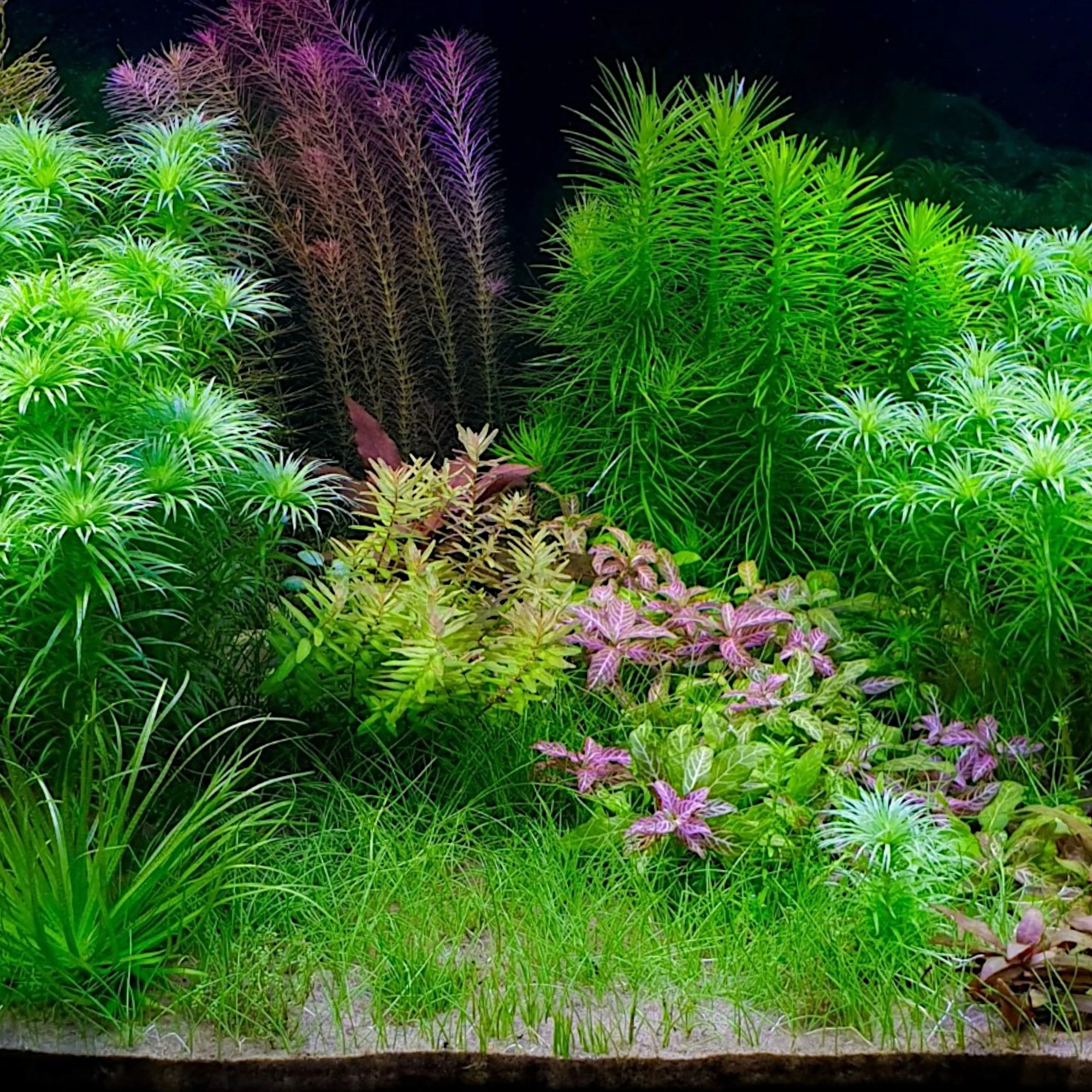
At a glance: Dwarf hairgrass care
Compiled reference information. Review the care notes and original sources below.
What temperature is listed for Dwarf hairgrass?
The compiled profile lists 20.0–28.0 °C for Dwarf hairgrass (Eleocharis pusilla). Check the original sources below for context and differing recommendations.
What tank size is listed for Dwarf hairgrass?
The profile lists a minimum tank volume of 2.6 US gallons (10.0 liters). Volume alone does not establish suitability; consider dimensions, group size and other inhabitants alongside the full care notes.
What pH is listed for Dwarf hairgrass?
The compiled profile lists a pH of 6.0–8.0. Review the cited care sources alongside the other water parameters in this profile.
Natural habitat
Eleocharis Pusilla is a carpeting plant native to wetlands, thriving in shallow waters with gentle flow. It forms dense mats that provide cover for small aquatic organisms and can grow in various water conditions.
Where they are found
This species is predominantly found in freshwater habitats in North America, specifically in the United States and Canada, where it contributes to the grassy landscapes of shallow water bodies.
Aquarium care
To grow Dwarf Hair Grass successfully, ensure moderate lighting and optional CO2 supplementation. Regular trimming may be needed to maintain its desired height and density.
Feeding
Hair Grass benefits from a nutrient-rich substrate and may require added fertilizers to support its growth, especially in lighter substrates. Regular monitoring of water parameters is recommended to ensure optimal growth.
Compatibility
Hair Grass pairs well with a variety of fish and invertebrates, making it a safe choice for community tanks. Its dense growth offers cover for small fish and shrimps, promoting a well-balanced ecosystem.
Breeding
This species reproduces through vegetative propagation. Trim and replant sections to encourage denser growth and cover larger areas in the aquarium.
Sources
Compiled from multiple independent care sheets — not copied from a single site.