Catalog / fish / Dwarf chain loach
fish · Cobitidae
Dwarf chain loach
Yasuhikotakia sidthimunki
Wild range: Southeast Asia (Asia)
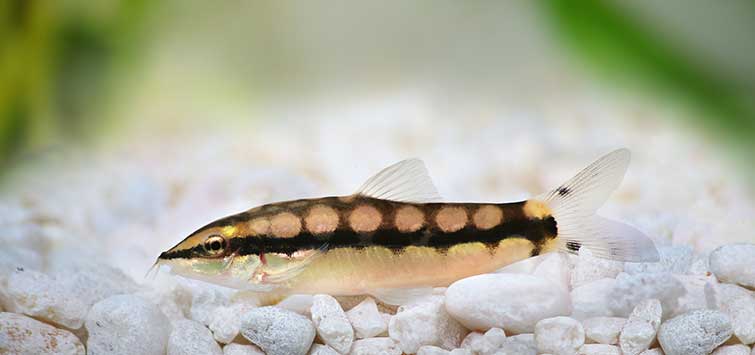
At a glance: Dwarf chain loach care
Compiled reference information. Review the care notes and original sources below.
What temperature is listed for Dwarf chain loach?
The compiled profile lists 24.0–28.0 °C for Dwarf chain loach (Yasuhikotakia sidthimunki). Check the original sources below for context and differing recommendations.
What tank size is listed for Dwarf chain loach?
The profile lists a minimum tank volume of 20.0 US gallons (80.0 liters). Volume alone does not establish suitability; consider dimensions, group size and other inhabitants alongside the full care notes.
What pH is listed for Dwarf chain loach?
The compiled profile lists a pH of 6.0–7.6. Review the cited care sources alongside the other water parameters in this profile.
Natural habitat
Yasuhikotakia sidthimunki is native to the tropical freshwater river systems of Thailand, where it inhabits habitats with slow-moving waters filled with plants and driftwood. These environments provide the ideal conditions for the species, allowing it to demonstrate its social and active behaviors in a natural setting.
Where they are found
This species is found in the Mae Klong and Chao Phraya river basins in Thailand. Specific details of its natural habitats are protected due to its endangered status.
Aquarium care
In captivity, the Dwarf Chain Loach thrives in a well-planted aquarium with rocky structures and multiple hiding spots to mimic its natural environment. Regular maintenance includes water changes and filter care to maintain water quality.
Feeding
Dwarf Chain Loaches are omnivores and will eagerly consume a variety of food types. Their diet should ideally include a mix of high-quality flakes, pellets, and live foods, such as blackworms, along with some plant material to support their natural foraging behavior.
Compatibility
These loaches are best kept in groups with peaceful tank mates such as Rasboras to encourage social behavior and reduce shyness, making them more active within the aquarium.
Breeding
Breeding is challenging, typically requiring hormonal injections for ovulation in a controlled setting. Indications of spawning behavior can be observed under specific environmental changes.
Sources
Compiled from multiple independent care sheets — not copied from a single site.