Catalog / fish / Diamond tetra
fish · Characidae
Diamond tetra
Moenkhausia pittieri
Wild range: Lake Valencia basin in Venezuela (South America)
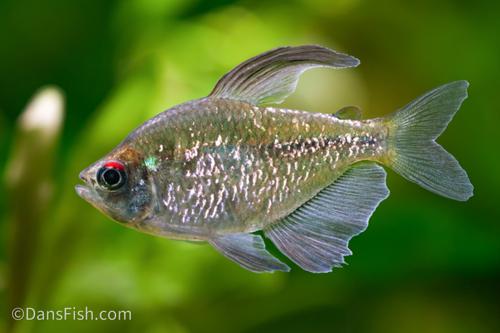
At a glance: Diamond tetra care
Compiled reference information. Review the care notes and original sources below.
What temperature is listed for Diamond tetra?
The compiled profile lists 23.9–28.0 °C for Diamond tetra (Moenkhausia pittieri). Check the original sources below for context and differing recommendations.
What tank size is listed for Diamond tetra?
The profile lists a minimum tank volume of 18.5 US gallons (70.0 liters). Volume alone does not establish suitability; consider dimensions, group size and other inhabitants alongside the full care notes.
What pH is listed for Diamond tetra?
The compiled profile lists a pH of 5.5–7.5. Review the cited care sources alongside the other water parameters in this profile.
Natural habitat
Diamond Tetras are found in slow-moving streams and rivers in the Lake Valencia basin in Venezuela. They thrive in soft and slightly acidic waters, often surrounded by dense vegetation where they feed on insects, worms, and crustaceans.
Where they are found
Endemic to Lake Valencia and surrounding waters, this species is largely traded in its mass-bred form from commercial farms.
Aquarium care
To care for Diamond Tetras, set up a richly planted tank with moderate lighting and gentle water flow. Ensure the water parameters mimic their natural habitat: warm, soft, and slightly acidic. This setup enhances their coloration and encourages natural behaviors, particularly when kept in proper groups of at least six individuals.
Feeding
Diamond Tetras thrive on a varied diet. High-quality flake or pellet foods can serve as their staple diet. Additionally, they benefit from occasional feedings of frozen or live foods like blackworms, which replicate their natural diet in the wild.
Compatibility
Diamond Tetras are ideal community fish and exhibit excellent compatibility with other peaceful species, including other tetras, corydoras, and dwarf cichlids. However, caution should be taken to avoid aggressive fish or fin-nippers which may lead to stress and poor health among the Tetras.
Breeding
Breeding can be achieved in a separate dimly lit tank with fine-leaved plants. Water conditions should be soft and slightly acidic, and proper care must be taken to remove adults after spawning to protect eggs.
Sources
Compiled from multiple independent care sheets — not copied from a single site.