Catalog / fish / Demasoni cichlid
fish · Cichlidae
Demasoni cichlid
Pseudotropheus demasoni
Wild range: Lake Malawi (Africa)
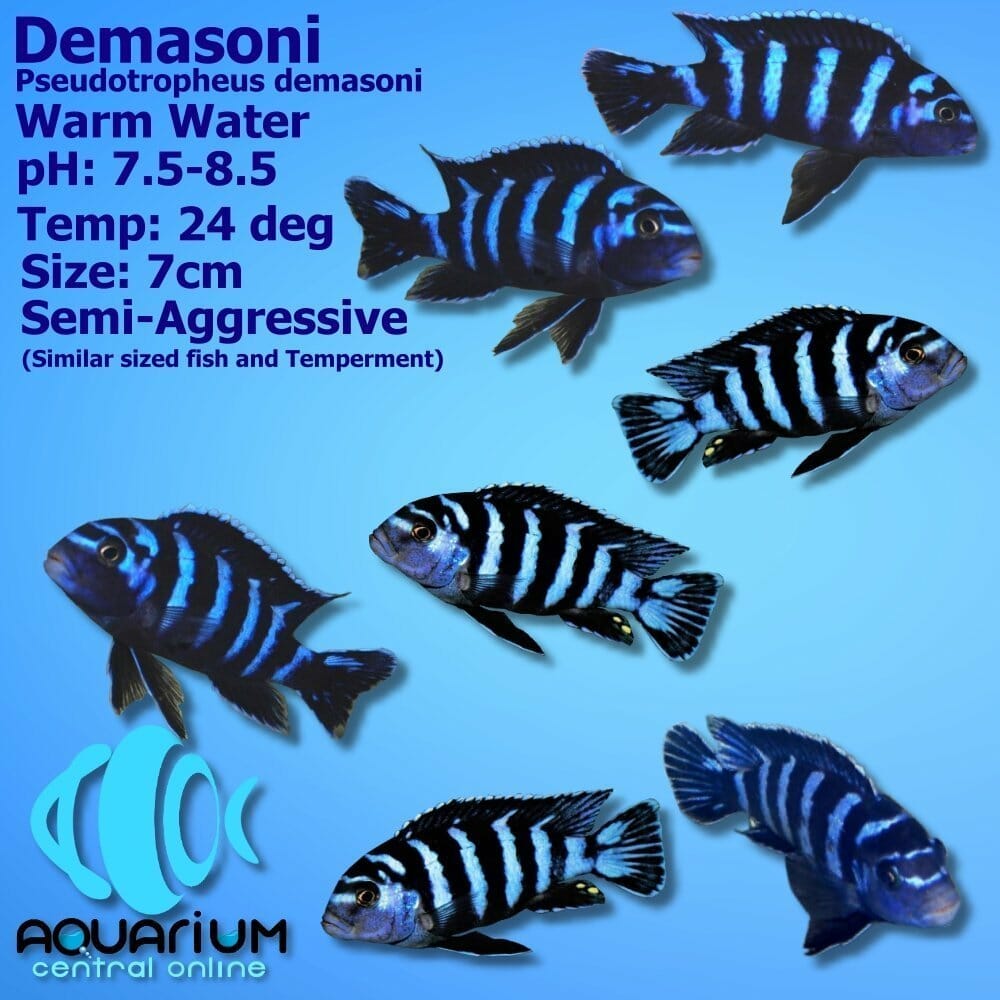
At a glance: Demasoni cichlid care
Compiled reference information. Review the care notes and original sources below.
What temperature is listed for Demasoni cichlid?
The compiled profile lists 23.0–28.0 °C for Demasoni cichlid (Pseudotropheus demasoni). Check the original sources below for context and differing recommendations.
What tank size is listed for Demasoni cichlid?
The profile lists a minimum tank volume of 26.0 US gallons (100.0 liters). Volume alone does not establish suitability; consider dimensions, group size and other inhabitants alongside the full care notes.
What pH is listed for Demasoni cichlid?
The compiled profile lists a pH of 7.4–8.5. Review the cited care sources alongside the other water parameters in this profile.
Natural habitat
Chindongo demasoni originates from the rocky habitats of Lake Malawi, characterized by high pH and moderate hardness, creating an alkaline environment. These fish thrive in areas with plenty of rocks, caves, and crevices for hiding and establishing territories.
Where they are found
This species is indigenous to specific areas around Pombo Rocks and Ndumbi reefs in Lake Malawi, known for its unique biodiversity.
Aquarium care
To maintain a healthy environment for Demasoni Cichlids, it is crucial to provide excellent filtration and perform regular water changes. A sandy substrate is recommended to allow for digging behavior. Additionally, the aquarium should be well-decorated with rocks to create hiding spots and territories, essential for reducing aggression among males.
Feeding
In captivity, the Demasoni Cichlid should be fed a diet high in algae and vegetable matter. Quality cichlid pellets formulated for herbivorous fish, spirulina, and vegetables such as zucchini and cucumber should be included. Monitoring protein intake is important to avoid digestive issues.
Compatibility
Demasoni Cichlids can be aggressive, especially towards similar-looking fish. It's best to house them with other robust African cichlids that can tolerate their territorial nature. Providing adequate space and hiding spots can help mitigate aggressive behaviors when introducing new tank mates.
Breeding
Breeding occurs through mouth-brooding, with females incubating the eggs for 14 to 20 days before the fry are ready for their own tank. It is essential to separate the fry to prevent them from being eaten.
Sources
Compiled from multiple independent care sheets — not copied from a single site.