Catalog / fish / Daisy ricefish
fish
Daisy ricefish
Oryzias woworae
Wild range: Sulawesi, Indonesia (Asia)
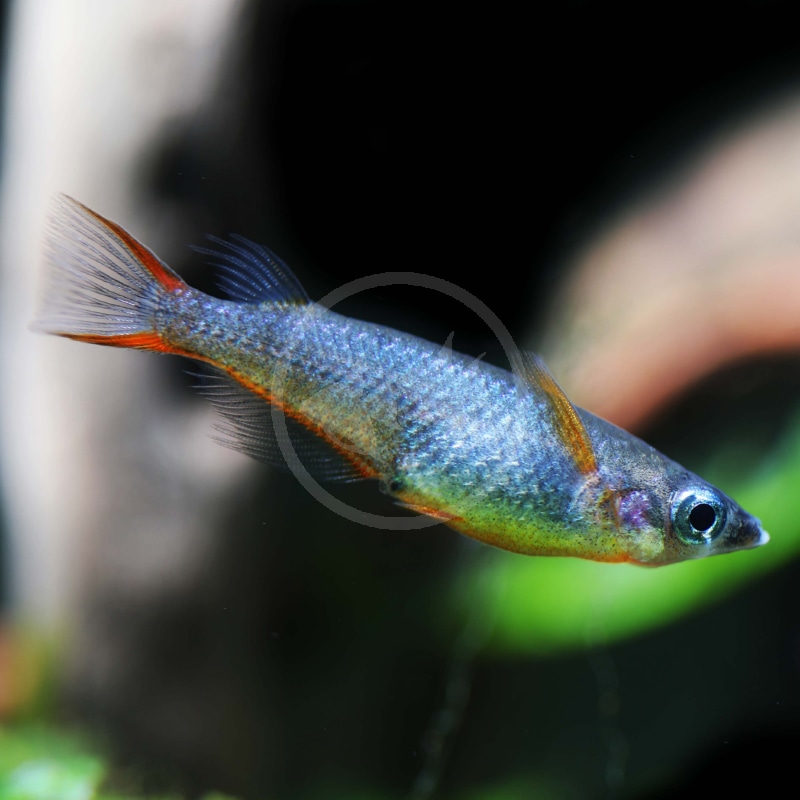
At a glance: Daisy ricefish care
Compiled reference information. Review the care notes and original sources below.
What temperature is listed for Daisy ricefish?
The compiled profile lists 20.0–27.8 °C for Daisy ricefish (Oryzias woworae). Check the original sources below for context and differing recommendations.
What tank size is listed for Daisy ricefish?
The profile lists a minimum tank volume of 10.0 US gallons (38.0 liters). Volume alone does not establish suitability; consider dimensions, group size and other inhabitants alongside the full care notes.
What pH is listed for Daisy ricefish?
The compiled profile lists a pH of 6.0–8.0. Review the cited care sources alongside the other water parameters in this profile.
Natural habitat
The Oryzias woworae, commonly known as Daisy's Blue Ricefish, is a freshwater species from Japan, well-suited for a range of aquatic environments. It thrives in both well-planted tanks and outdoor ponds, adapting well to various salinities, making it a resilient addition to community aquaria.
Where they are found
As an endemic species, the Daisy's Blue Ricefish thrives in distinct ecological conditions found only in its native range in Sulawesi. It is essential to mimic these conditions in captivity for optimal health.
Aquarium care
To maintain Daisy’s ricefish in captivity, it is crucial to duplicate their natural habitat with sufficient plants and leaf litter. Regular water changes are necessary to maintain water quality and stabilize the parameters.
Feeding
Feeding Daisy's Blue Ricefish is straightforward as they are omnivores. Offer a variety of high-quality flakes, micro pellets, and the occasional live or frozen food. Smaller portions should be fed once or twice daily to prevent overfeeding.
Compatibility
While Daisy's ricefish are peaceful, they require the company of their own kind and are recommended to be kept with similarly sized species in a well-planted aquarium. They are not suitable for standard community tanks due to their small size.
Breeding
Breeding is relatively straightforward, with the species being egg scatterers. Providing ample vegetation and a separate breeding tank can promote successful reproduction.
Sources
Compiled from multiple independent care sheets — not copied from a single site.