Catalog / plants / Undulate cryptocoryne
plant · Araceae
Undulate cryptocoryne
Cryptocoryne undulata
Wild range: South Asia (Asia)
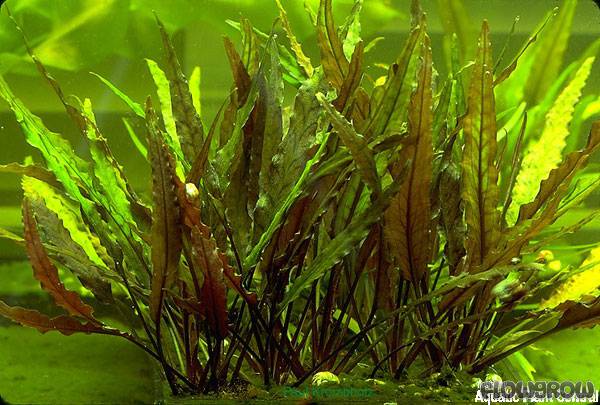
At a glance: Undulate cryptocoryne care
Compiled reference information. Review the care notes and original sources below.
What temperature is listed for Undulate cryptocoryne?
The compiled profile lists 20.0–28.0 °C for Undulate cryptocoryne (Cryptocoryne undulata). Check the original sources below for context and differing recommendations.
What tank size is listed for Undulate cryptocoryne?
The profile lists a minimum tank volume of 5.0 US gallons (20.0 liters). Volume alone does not establish suitability; consider dimensions, group size and other inhabitants alongside the full care notes.
What pH is listed for Undulate cryptocoryne?
The compiled profile lists a pH of 6.0–8.0. Review the cited care sources alongside the other water parameters in this profile.
Natural habitat
Cryptocoryne undulata is a slow-growing, rhizomatous aquatic plant from the family Araceae, native to Sri Lanka. It thrives in still waters and is found in submerged zones across various aquatic environments. The plant is adapted to low to moderate water movement and performs best when planted in nutrient-rich substrates under appropriately controlled conditions.
Where they are found
This plant predominantly grows in Sri Lanka, known for its wider leaves and attractive flecked patterns, especially in culturing varieties.
Aquarium care
Care for Cryptocoryne undulata is relatively straightforward. This plant requires moderate lighting, and supplemental iron fertilization can enhance the vibrancy of its leaf coloration. It can grow well in a variety of water conditions and does not require the strict pH or hardness levels that some other plants do.
Feeding
Cryptocoryne undulata requires minimal fertilization due to its low nutrient demands. Use slow-release fertilizers or nutrient-rich substrates to ensure the plant receives adequate nutrition. Monitor for nutrient deficiencies, as leaf discoloration can occur if essential elements are lacking.
Compatibility
This plant is safe for community aquariums. It provides shelter and aesthetic benefits without competing aggressively for nutrients. It can be combined with other similar plants as well as a variety of fish species without causing issues.
Breeding
Propagation is typically achieved through vegetative means, where the plant produces offsets or runners that can be replanted in the aquarium.
Sources
Compiled from multiple independent care sheets — not copied from a single site.