Catalog / plants / Cryptocoryne parva
plant · Araceae
Cryptocoryne parva
Cryptocoryne parva
Wild range: Southeast Asia (Asia)
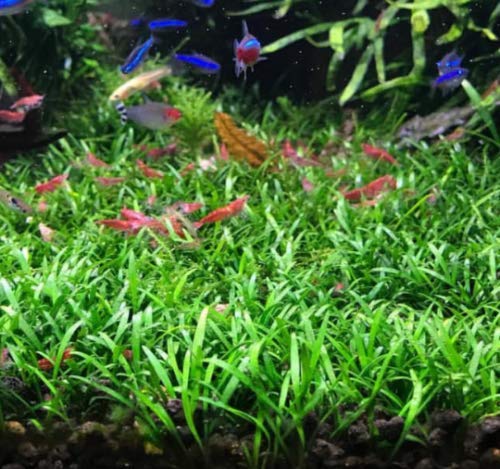
At a glance: Cryptocoryne parva care
Compiled reference information. Review the care notes and original sources below.
What temperature is listed for Cryptocoryne parva?
The compiled profile lists 22.0–28.0 °C for Cryptocoryne parva (Cryptocoryne parva). Check the original sources below for context and differing recommendations.
What tank size is listed for Cryptocoryne parva?
The profile lists a minimum tank volume of 2.6 US gallons (10.0 liters). Volume alone does not establish suitability; consider dimensions, group size and other inhabitants alongside the full care notes.
What pH is listed for Cryptocoryne parva?
The compiled profile lists a pH of 5.5–7.5. Review the cited care sources alongside the other water parameters in this profile.
Natural habitat
Cryptocoryne parva is commonly found in swamps and wetlands in Southeast Asia, particularly in Thailand and Malaysia. It thrives in low light conditions with minimal water movement, making it suitable for various freshwater aquarium settings.
Where they are found
This species is typically found in shaded areas of its native habitat, where it can grow among other aquatic vegetation, illustrating its preference for low-light environments. It does well in nutrient-rich substrates, where it can establish its roots effectively.
Aquarium care
This plant is noted for its minimal care requirements, making it ideal for beginners. It grows well in low to moderate lighting conditions and does not require CO2 injection, though supplementary nutrients may enhance its growth.
Feeding
The plant primarily absorbs nutrients through its roots. While fish waste can supply necessary nutrients, occasional use of root tabs or mild fertilization will enhance its growth and health.
Compatibility
Cryptocoryne parva is suitable for community tanks and can be kept with a variety of peaceful fish species. Avoid aggressive fish that may uproot or damage the plant.
Breeding
This species propagates primarily through vegetative means, with new plants emerging from the parent. Patience is needed as growth is slow, but with proper conditions, it will establish and spread in the aquarium over time.
Sources
Compiled from multiple independent care sheets — not copied from a single site.