Catalog / fish / Croaking gourami
fish · Osphronemidae
Croaking gourami
Trichopsis vittata
Wild range: South Asia (Asia)
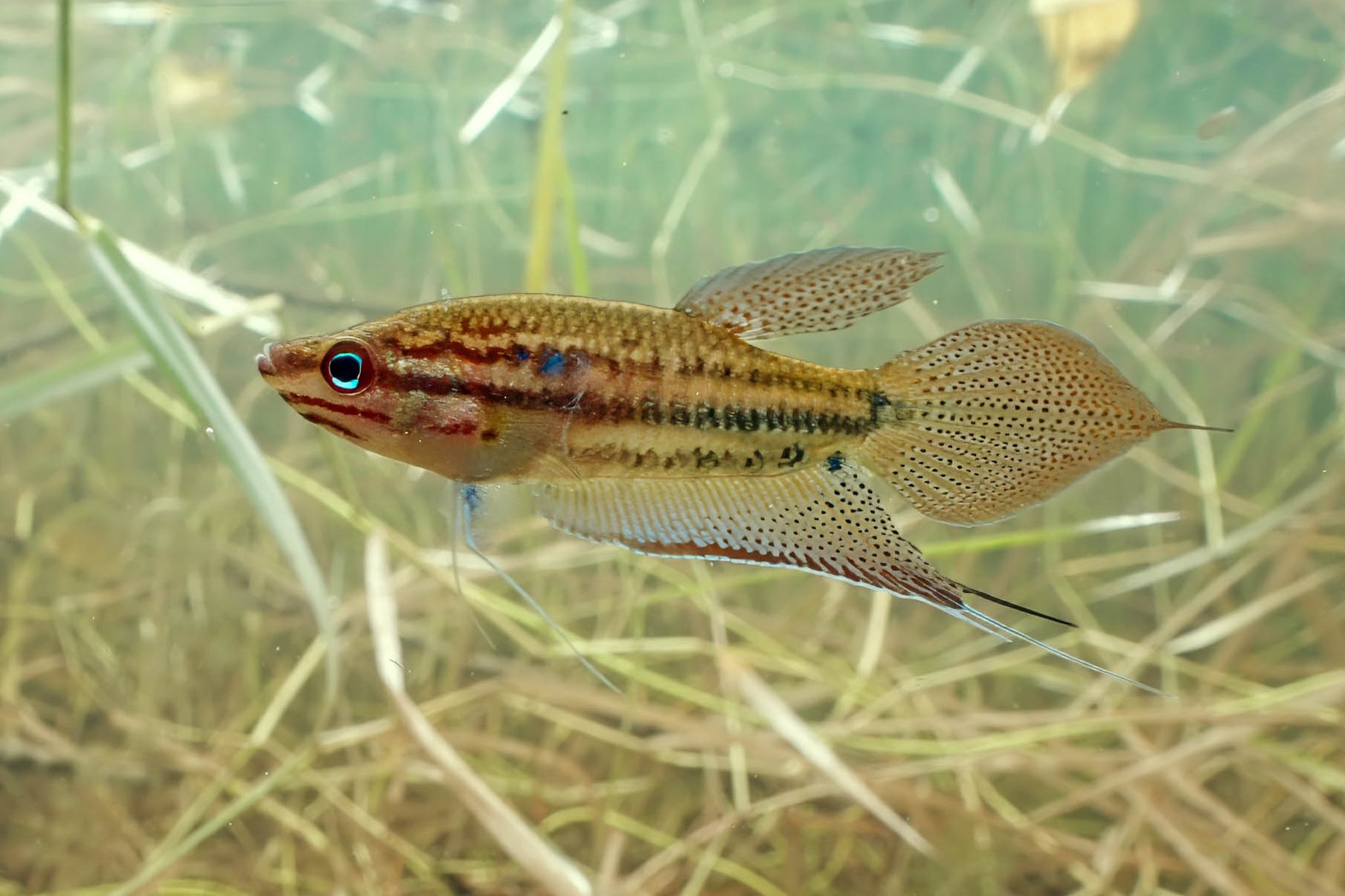
At a glance: Croaking gourami care
Compiled reference information. Review the care notes and original sources below.
What temperature is listed for Croaking gourami?
The compiled profile lists 22.0–28.0 °C for Croaking gourami (Trichopsis vittata). Check the original sources below for context and differing recommendations.
What tank size is listed for Croaking gourami?
The profile lists a minimum tank volume of 10.0 US gallons (38.0 liters). Volume alone does not establish suitability; consider dimensions, group size and other inhabitants alongside the full care notes.
What pH is listed for Croaking gourami?
The compiled profile lists a pH of 6.0–8.0. Review the cited care sources alongside the other water parameters in this profile.
Natural habitat
Dwarf Gouramis are typically found in slow-moving waters across South Asia. They are adapted to living in areas with dense vegetation and sometimes in water conditions that can quickly change, particularly during the rainy season.
Where they are found
Primarily located in South East Asia, particularly in the Ratchaburi area of Thailand, the Croaking Gourami thrives in waters that are not heavily flowing or situated at high altitudes.
Aquarium care
These gouramis require a well-furnished aquarium with plenty of hiding places and gentle water circulation to mimic their natural habitat. Although they can acclimatize to a range of conditions, optimal care includes soft, slightly acidic water conditions. They are social fish and do well in community settings with smaller fish.
Feeding
Dwarf Gouramis are eager eaters and should receive a varied diet, including high-quality flakes, pellets, frozen, and live foods. Care should be taken to ensure slower fish can access food, as Gouramis may dominate feeding time.
Compatibility
Croaking Gouramis are generally peaceful and can be kept in a community tank. However, caution is advised when housing them with small ornamental shrimp, as they may exhibit micro-predator behavior towards them. Males may squabble during breeding but are unlikely to cause harm if enough covering is present in the tank.
Breeding
Breeding this species involves the male building a bubble nest. After mating, the female lays eggs in the nest. It is crucial to have a separate breeding tank and ensure the parents are removed after spawning to prevent them from eating the fry.
Sources
Compiled from multiple independent care sheets — not copied from a single site.