Catalog / plants / African onion plant
plant · Amaryllidaceae
African onion plant
Crinum calamistratum
Wild range: Central Africa (Africa)
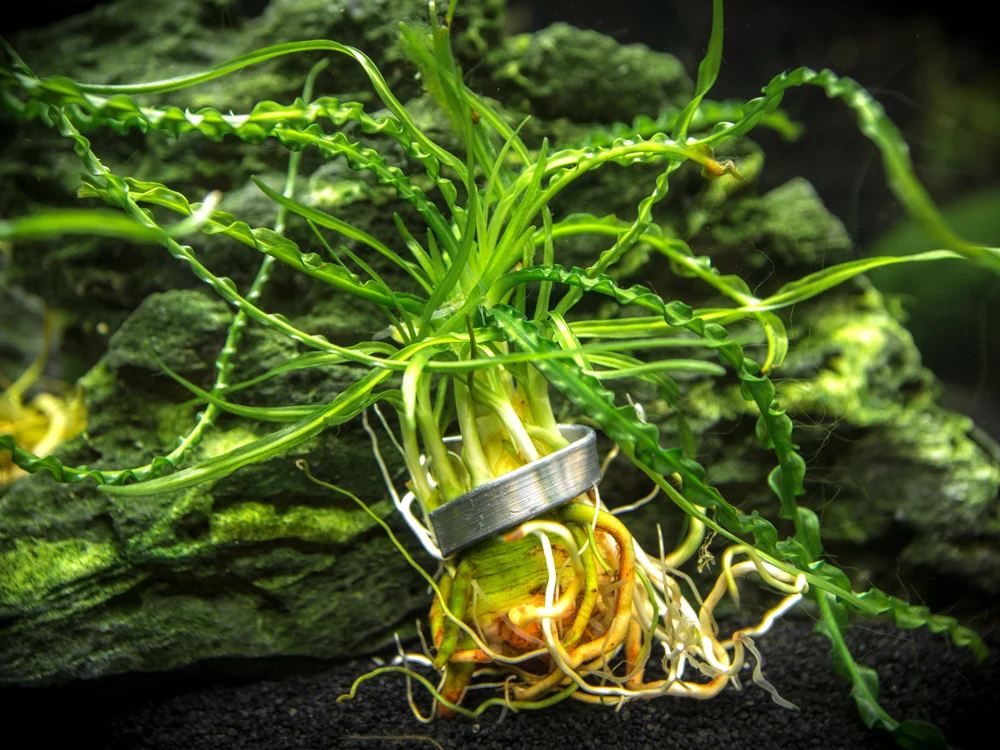
At a glance: African onion plant care
Compiled reference information. Review the care notes and original sources below.
What temperature is listed for African onion plant?
The compiled profile lists 20.0–28.0 °C for African onion plant (Crinum calamistratum). Check the original sources below for context and differing recommendations.
What tank size is listed for African onion plant?
The profile lists a minimum tank volume of 7.9 US gallons (30.0 liters). Volume alone does not establish suitability; consider dimensions, group size and other inhabitants alongside the full care notes.
What pH is listed for African onion plant?
The compiled profile lists a pH of 6.0–7.5. Review the cited care sources alongside the other water parameters in this profile.
Natural habitat
Crinum calamistratum is a notable plant that thrives primarily in calm waters, making it ideal for aquariums as a centerpiece or background plant. It is characterized by its tall growth and unique ruffled leaves, which create an appealing aesthetic in aquatic setups.
Where they are found
The species is locally distributed in areas around Kumba, Cameroon, suggesting it may have a limited natural range dependent on specific water conditions.
Aquarium care
For successful aquarium care, ensure that the water parameters remain stable, with a temperature range of 20-28°C and a pH of 6.0 to 7.5. The addition of CO2 can boost growth, while moderate to high lighting mimics its natural habitat conditions.
Feeding
African Water Onion does not require additional fertilization but benefits from detritus and organic matter in the substrate.
Compatibility
Crinum calamistratum is generally compatible with a wide range of peaceful community fish. However, care should be taken to avoid aggressive species that may uproot or damage its delicate bulbs.
Breeding
Crinum calamistratum does not typically reproduce sexually in captivity; propagation is usually done through asexual methods.
Sources
Compiled from multiple independent care sheets — not copied from a single site.