Catalog / fish / Convict cichlid
fish · Cichlidae
Convict cichlid
Amatitlania nigrofasciata
Wild range: Central America (North America)
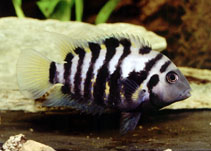
At a glance: Convict cichlid care
Compiled reference information. Review the care notes and original sources below.
What temperature is listed for Convict cichlid?
The compiled profile lists 23.3–29.0 °C for Convict cichlid (Amatitlania nigrofasciata). Check the original sources below for context and differing recommendations.
What tank size is listed for Convict cichlid?
The profile lists a minimum tank volume of 20.0 US gallons (75.0 liters). Volume alone does not establish suitability; consider dimensions, group size and other inhabitants alongside the full care notes.
What pH is listed for Convict cichlid?
The compiled profile lists a pH of 6.0–8.0. Review the cited care sources alongside the other water parameters in this profile.
Natural habitat
The Convict Cichlid is found in a diverse range of environments in Central America, ranging from flowing rivers to still ponds and lakes. They prefer areas with cover, such as rocks and vegetation, rather than open water.
Where they are found
This species is native to Central America, particularly from Costa Rica to Guatemala on the Pacific slope and from Honduras to Panama on the Atlantic slope. Introduced populations exist in some areas of the U.S.
Aquarium care
In the aquarium, convict cichlids require a habitat that mimics their natural environments, including plenty of rocks and artificial caves for breeding. A minimum tank size of 75 liters (20 gallons) is recommended for a breeding pair. They are relatively easy to care for and adapt well to a variety of water conditions, although external filtration systems are preferable due to their habit of digging.
Feeding
These fish have a varied diet and accept most foods. It's best to provide a mix of high-quality pellets, flakes, and occasional live or frozen foods to ensure optimal health.
Compatibility
While convict cichlids can be kept with other species, their aggressive and territorial nature, especially during breeding, means they are best housed alone or with less aggressive species. The presence of breeding pairs can lead to conflict with tankmates.
Breeding
Breeding is straightforward as they are cave spawners. Provide suitable spawning sites such as caves, rocky overhangs, or clay pots. Breeding typically starts around one year of age, and they can lay 100 to 300 eggs at a time.
Sources
Compiled from multiple independent care sheets — not copied from a single site.