Catalog / fish / Compressiceps
fish · Cichlidae
Compressiceps
Altolamprologus compressiceps
Wild range: Lake Tanganyika (Africa)
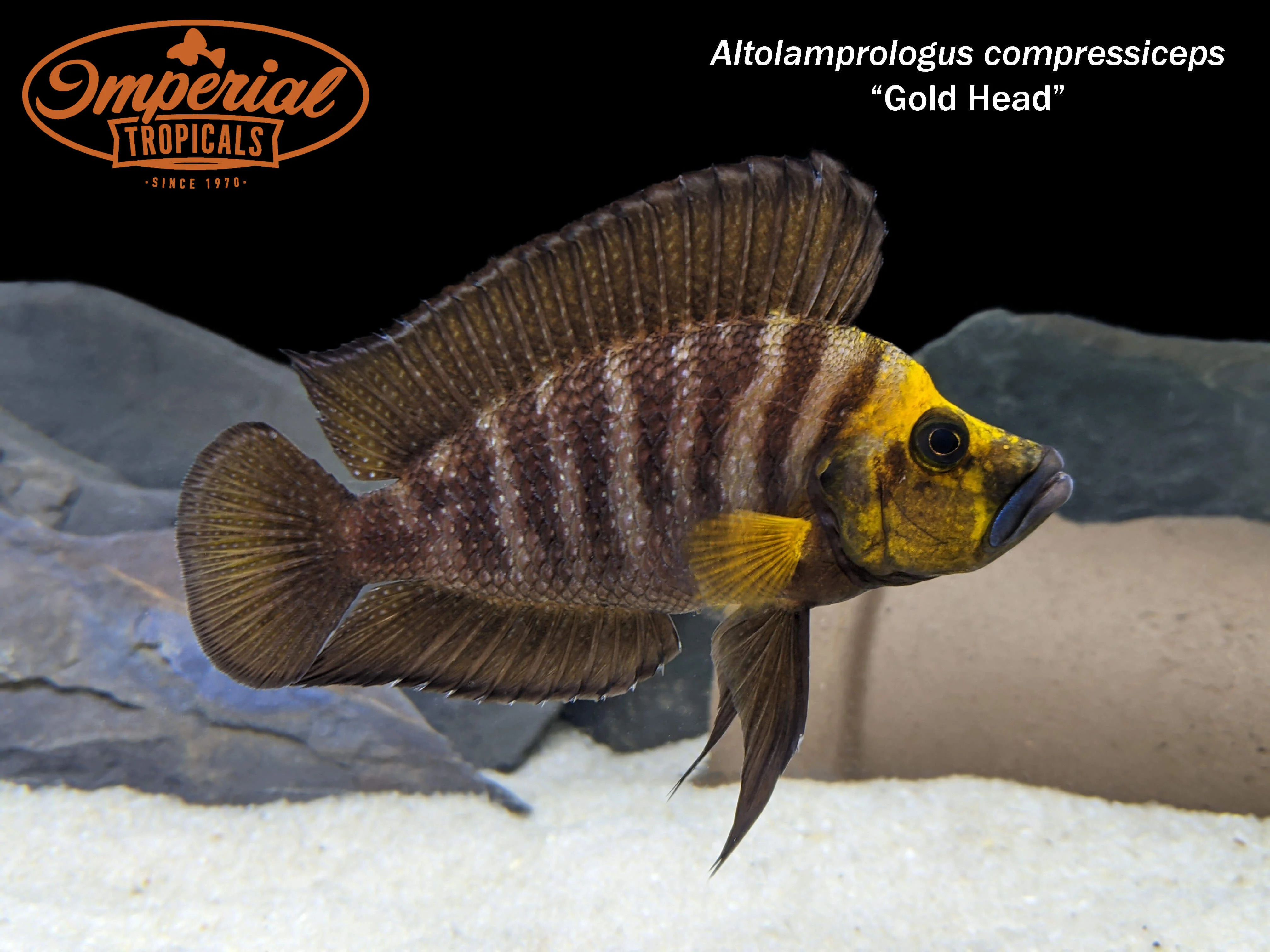
At a glance: Compressiceps care
Compiled reference information. Review the care notes and original sources below.
What temperature is listed for Compressiceps?
The compiled profile lists 23.0–28.0 °C for Compressiceps (Altolamprologus compressiceps). Check the original sources below for context and differing recommendations.
What tank size is listed for Compressiceps?
The profile lists a minimum tank volume of 40.0 US gallons (150.0 liters). Volume alone does not establish suitability; consider dimensions, group size and other inhabitants alongside the full care notes.
What pH is listed for Compressiceps?
The compiled profile lists a pH of 7.0–9.0. Review the cited care sources alongside the other water parameters in this profile.
Natural habitat
Altolamprologus compressiceps inhabits the rocky areas of Lake Tanganyika, where it utilizes its laterally compressed body to hide and breed in crevices, avoiding larger predators. The species is generally found in stable conditions, requiring clean water with specific hardness and pH levels.
Where they are found
The species is indigenous to Lake Tanganyika, which lies between four countries in East Africa: Tanzania, the Democratic Republic of the Congo, Zambia, and Burundi. This lake is notable for its depth and unique biodiversity.
Aquarium care
In an aquarium setting, Altolamprologus compressiceps requires ample space (minimum of 250 liters) and specific environmental conditions including appropriate substrate and decor to simulate its natural habitat. Substrates should consist of soft sand and rocks to create hiding places, while the chosen water parameters must closely mimic those of its native lakes.
Feeding
This cichlid is primarily carnivorous, thriving on a diet that includes high-quality pellets, brine shrimp, and bloodworms. Fry from other fish species also form part of their diet, being adept at hunting small prey within the rock formations.
Compatibility
Altolamprologus compressiceps should be housed with peaceful, non-territorial species to minimize aggression. Due to their territorial nature, they may not fare well in a community setup if paired with other aggressive or similarly-tempered species. Adequate space and territorial boundaries within the aquarium are crucial for successful cohabitation.
Breeding
Breeding usually occurs within caves or crevices where the female lays her eggs. The male will protect the territory while the female cares for the eggs. Water conditions should remain stable during this time to promote successful breeding.
Sources
Compiled from multiple independent care sheets — not copied from a single site.