Catalog / fish / Common hatchetfish
fish · Gasteropelecidae
Common hatchetfish
Gasteropelecus sternicla
Wild range: Amazon Basin (South America)
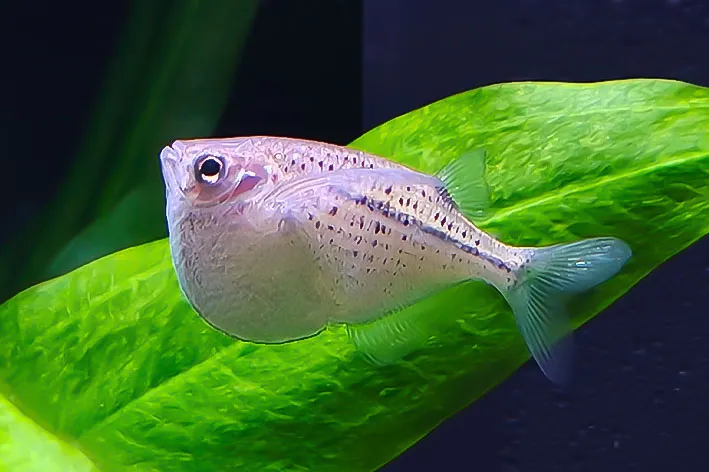
At a glance: Common hatchetfish care
Compiled reference information. Review the care notes and original sources below.
What temperature is listed for Common hatchetfish?
The compiled profile lists 22.0–28.0 °C for Common hatchetfish (Gasteropelecus sternicla). Check the original sources below for context and differing recommendations.
What tank size is listed for Common hatchetfish?
The profile lists a minimum tank volume of 10.6 US gallons (40.0 liters). Volume alone does not establish suitability; consider dimensions, group size and other inhabitants alongside the full care notes.
What pH is listed for Common hatchetfish?
The compiled profile lists a pH of 4.0–7.5. Review the cited care sources alongside the other water parameters in this profile.
Natural habitat
Gasteropelecus sternicla inhabits the Amazon river and its tributaries, primarily found near the surface in well-vegetated areas and occasionally venturing into open water. This species thrives in rainforest biomes, specifically in rivers and streams.
Where they are found
Found mainly in Brazil, Colombia, and Venezuela, the Silver Hatchetfish is endemic to freshwater systems within these regions, where water is typically warm and slightly acidic.
Aquarium care
Maintain a stable pH between 6.0 and 6.8, with water hardness of 2.0 to 14.0 dGH. Keep the tank's lid tight-fitting to prevent jumping, as these fish inhabit the upper water column of community aquariums. The common hatchetfish can cohabit with most other tropical species, making it an excellent community fish.
Feeding
Gasteropelecus sternicla primarily consumes surface-dwelling insects and larvae. In captivity, they enjoy a varied diet including high-quality flakes, small pellets, and live or frozen food such as Daphnia and brine shrimp. It is important to ensure food is offered near the water’s surface to accommodate their feeding habits.
Compatibility
Peaceful with most tropical fish; however, territoriality may arise among multiple hatchetfish. They are best kept in groups of 6 or more to reduce stress and aggression.
Breeding
Breeding may be tricky as they require specific conditions, typically involving slightly acidic and soft water. They spawn at the surface among plants; eggs need to be removed if you want to prevent them from being eaten by the parents.
Sources
Compiled from multiple independent care sheets — not copied from a single site.