Catalog / fish / Cockatoo dwarf cichlid
fish · Cichlidae
Cockatoo dwarf cichlid
Apistogramma cacatuoides
Wild range: Amazon Basin (South America)
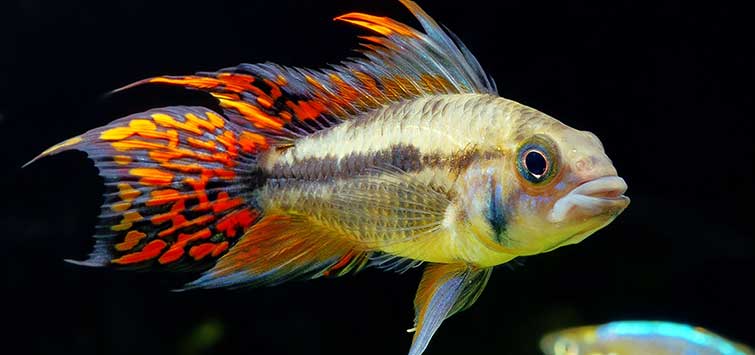
At a glance: Cockatoo dwarf cichlid care
Compiled reference information. Review the care notes and original sources below.
What temperature is listed for Cockatoo dwarf cichlid?
The compiled profile lists 22.0–30.0 °C for Cockatoo dwarf cichlid (Apistogramma cacatuoides). Check the original sources below for context and differing recommendations.
What tank size is listed for Cockatoo dwarf cichlid?
The profile lists a minimum tank volume of 10.0 US gallons (38.0 liters). Volume alone does not establish suitability; consider dimensions, group size and other inhabitants alongside the full care notes.
What pH is listed for Cockatoo dwarf cichlid?
The compiled profile lists a pH of 5.0–7.0. Review the cited care sources alongside the other water parameters in this profile.
Natural habitat
Apistogrammas inhabit slow-moving waters with sandy bottoms and heavy vegetation, typically found in tropical regions of South America, particularly in the Amazon basin.
Where they are found
These cichlids prefer habitats that are rich in plant life and organic debris, reflecting their adaptation to the diverse ecosystems of the Amazon River basin. Their environment supports a variety of aquatic life, contributing to their omnivorous diet.
Aquarium care
A 10-gallon tank with a sponge filter and slow water flow is ideal for keeping Apistogramma alacrina. Incorporate plenty of plants and hiding places to mimic their natural environment. Regular water changes and maintenance of soft, acidic water conditions will aid in their health and breeding.
Feeding
Feed Apistogrammas a diet rich in both protein and greens, including high-quality sinking pellets, live foods like brine shrimp, and vegetables such as cucumbers. They do not compete well for food at the surface, so ensure offerings are accessible at the bottom.
Compatibility
Cohabitation with peaceful community fish, such as rasboras or less-aggressive tetras, is recommended. Avoid aggressive tankmates that could stress the Apistogramma or disrupt breeding.
Breeding
Breeding requires appropriate conditions with a protein-rich diet to support reproductive health. Create separate territories and provide ample hiding spaces to allow the female to lay eggs without disruption, as males can become territorial during this time.
Sources
Compiled from multiple independent care sheets — not copied from a single site.