Catalog / fish / Cochu's blue tetra
fish · Characidae
Cochu's blue tetra
Boehlkea fredcochui
Wild range: Amazon Basin (South America)
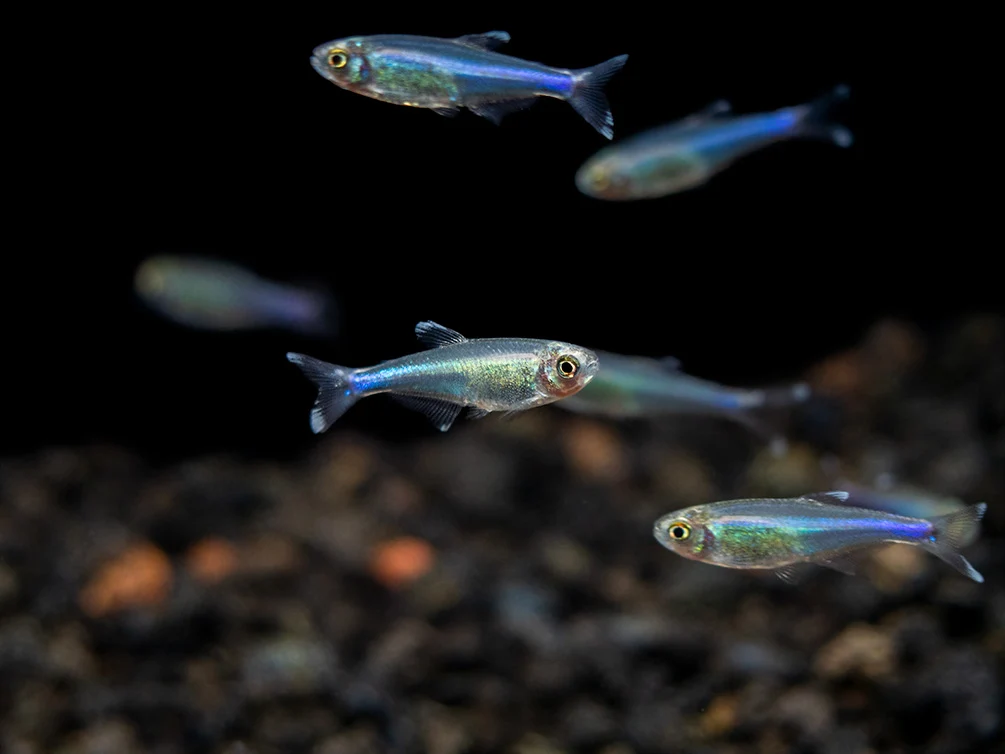
At a glance: Cochu's blue tetra care
Compiled reference information. Review the care notes and original sources below.
What temperature is listed for Cochu's blue tetra?
The compiled profile lists 22.0–27.7 °C for Cochu's blue tetra (Boehlkea fredcochui). Check the original sources below for context and differing recommendations.
What tank size is listed for Cochu's blue tetra?
The profile lists a minimum tank volume of 25.0 US gallons (94.0 liters). Volume alone does not establish suitability; consider dimensions, group size and other inhabitants alongside the full care notes.
What pH is listed for Cochu's blue tetra?
The compiled profile lists a pH of 5.5–8.0. Review the cited care sources alongside the other water parameters in this profile.
Natural habitat
Boehlkea fredcochui, commonly known as Cochu's Blue Tetra, is native to the Rio Marañón in Peru. They inhabit warm, acidic waters with dense aquatic vegetation, which provides both shelter and breeding grounds.
Where they are found
This species is primarily found in slow-moving waters with abundant vegetation, where they often swim in the upper levels of the water column.
Aquarium care
To care for Blue Tetras, ensure a well-maintained aquarium with regular water changes. They require a spacious environment, ideally a minimum of 113 liters (30 gallons), and should be kept in groups of at least five to reduce aggression. Providing hiding spots with plants and decor will help them feel secure, while open spaces accommodate their swimming habits.
Feeding
Cochu's Blue Tetra accepts a variety of foods, including high-quality flake food and frozen alternatives. A varied diet ensures optimum health and color expression. It is recommended to offer smaller portions multiple times a day rather than one large feeding.
Compatibility
Blue Tetras are community-safe fish and can coexist with other peaceful species. However, their occasional nipping behavior may pose a problem when housed with long-finned fish.
Breeding
Breeding is straightforward; provide a separate breeding tank with soft, slightly acidic water and ample plants. After spawning, remove the adults to prevent them from eating the eggs.
Sources
Compiled from multiple independent care sheets — not copied from a single site.