Catalog / fish / Clown rasbora
fish · Cyprinidae
Clown rasbora
Rasbora kalochroma
Wild range: Southeast Asia (Asia)
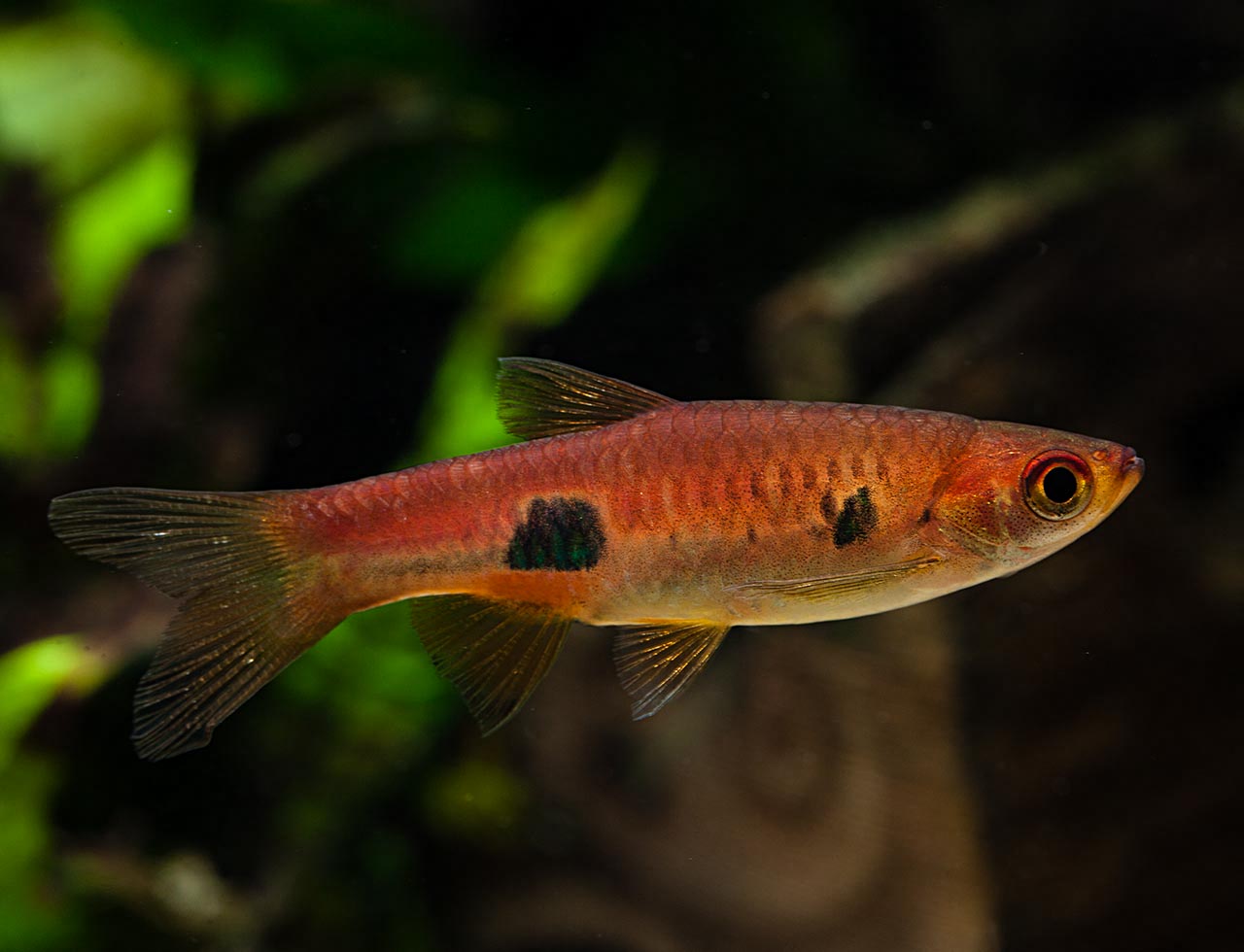
At a glance: Clown rasbora care
Compiled reference information. Review the care notes and original sources below.
What temperature is listed for Clown rasbora?
The compiled profile lists 22.0–28.0 °C for Clown rasbora (Rasbora kalochroma). Check the original sources below for context and differing recommendations.
What tank size is listed for Clown rasbora?
The profile lists a minimum tank volume of 15.0 US gallons (60.0 liters). Volume alone does not establish suitability; consider dimensions, group size and other inhabitants alongside the full care notes.
What pH is listed for Clown rasbora?
The compiled profile lists a pH of 5.0–7.5. Review the cited care sources alongside the other water parameters in this profile.
Natural habitat
Clown Rasboras thrive in slow-moving streams, rivers, and swampy areas characterized by dense vegetation and submerged roots. These habitats feature soft, acidic water conditions, with temperatures between 22°C and 26°C.
Where they are found
This species can be found in warm and humid conditions throughout its native range, often occupying areas with limited light and dense vegetation, which is crucial for its behavioural and physiological well-being.
Aquarium care
For optimal care, a well-planted aquarium with a dark substrate is recommended. The addition of dried leaf litter and driftwood can enhance the natural feel and provide cover. Regular water maintenance is crucial to prevent swings in chemistry, and dim lighting conditions are preferred.
Feeding
Clown Rasboras are omnivorous and enjoy a balanced diet of high-quality flake food, supplemented with live or frozen foods like bloodworms and brine shrimp. Feeding them small portions several times a day mimics their natural feeding habits.
Compatibility
Clown Rasboras are peaceful and suitable for community tanks. To reduce stress, they should be kept in groups of at least 8-10. They are best maintained in a species-appropriate biotope community, sharing space with similarly peaceful species. Proper research on tank mates is essential.
Breeding
Breeding this species can be successful in a separate spawning tank set up with appropriate substrates and plants. Warm, stable water conditions stimulate breeding, and it's best to remove parents after spawning to protect the eggs.
Sources
Compiled from multiple independent care sheets — not copied from a single site.