fish · Callichthyidae
Clown pleco
Panaqolus maccus
Wild range: Venezuela and Colombia (South America)
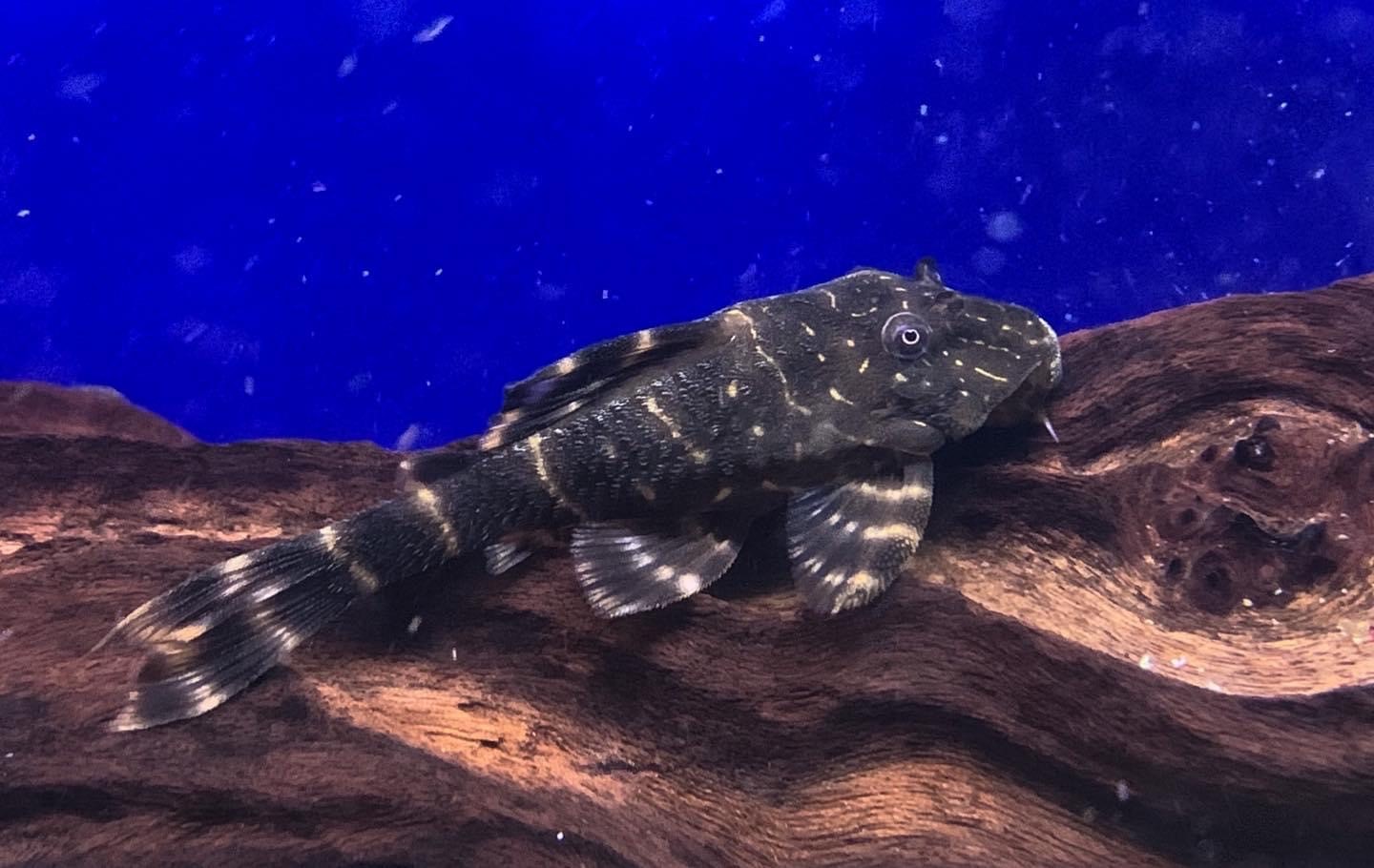
At a glance: Clown pleco care
Compiled reference information. Review the care notes and original sources below.
What temperature is listed for Clown pleco?
The compiled profile lists 22.0–28.0 °C for Clown pleco (Panaqolus maccus). Check the original sources below for context and differing recommendations.
What tank size is listed for Clown pleco?
The profile lists a minimum tank volume of 20.0 US gallons (75.7 liters). Volume alone does not establish suitability; consider dimensions, group size and other inhabitants alongside the full care notes.
What pH is listed for Clown pleco?
The compiled profile lists a pH of 6.0–8.0. Review the cited care sources alongside the other water parameters in this profile.
Natural habitat
Clown Plecos thrive in slow-moving waters of rivers in Venezuela and Colombia, where they inhabit areas rich in driftwood and organic debris. This environment is essential for their grazing behavior, as they feed on biofilm and algae that grow on the submerged wood.
Where they are found
This species ranges from Mexico through Honduras and into Nicaragua, occupying areas with sufficient shelter and access to open swimming regions in the water.
Aquarium care
Provide a well-filtered tank with plenty of driftwood, as this is essential for their diet and wellbeing. They thrive in community tanks with non-aggressive species. Ensure that the aquarium has sufficient hiding spots and space for swimming.
Feeding
Clown Plecos should be offered a varied diet that includes algae wafers, blanched vegetables like zucchini, and occasional protein sources such as bloodworms. Evening feedings are preferable, as these fish are more active during the night.
Compatibility
Generally peaceful, the Clown Plecostomus can cohabitate with most community fish, avoiding aggressive cichlids and larger fish that may pose a threat.
Breeding
Breeding typically involves the formation of a pair, which can be achieved in a spacious tank. The pair will prepare a flat surface for laying eggs and exhibit strong parental care. It is crucial to monitor the tank to prevent aggression towards offspring.
Sources
Compiled from multiple independent care sheets — not copied from a single site.