fish · Cobitidae
Clown loach
Chromobotia macracanthus
Wild range: Southeast Asia (Asia)
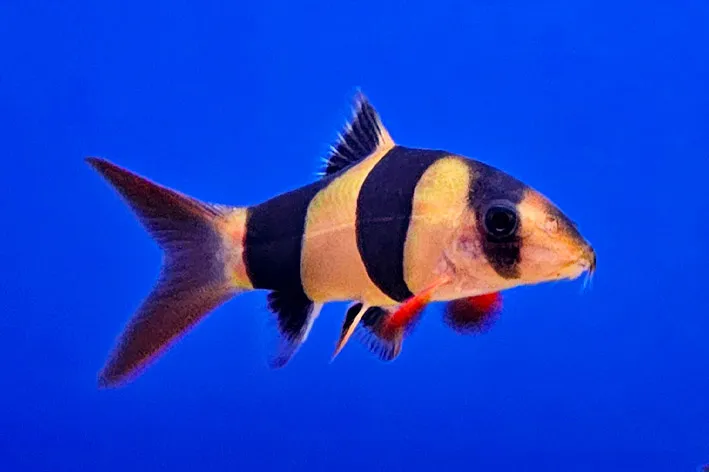
At a glance: Clown loach care
Compiled reference information. Review the care notes and original sources below.
What temperature is listed for Clown loach?
The compiled profile lists 25.0–30.0 °C for Clown loach (Chromobotia macracanthus). Check the original sources below for context and differing recommendations.
What tank size is listed for Clown loach?
The profile lists a minimum tank volume of 70.0 US gallons (265.0 liters). Volume alone does not establish suitability; consider dimensions, group size and other inhabitants alongside the full care notes.
What pH is listed for Clown loach?
The compiled profile lists a pH of 5.0–8.0. Review the cited care sources alongside the other water parameters in this profile.
Natural habitat
Clown loaches are native to the rivers and flooded plains of Sumatra and Borneo in Indonesia, thriving in warm, slow-moving waters that are well-oxygenated. They are typically found in large schools, which helps provide them with security and social interaction.
Where they are found
These fish are commonly found in their natural habitat, characterized by consistent warm temperatures and a typical pH range of 6.5 to 7.5. They are known to adapt relatively well to various water conditions, including different hardness levels.
Aquarium care
Clown loaches require a minimum aquarium size of 150 cm to accommodate their active swimming habits. They thrive in a well-maintained environment with adequate filtration and gentle water flow. Regular water changes and good water quality are crucial for their health.
Feeding
Clown loaches are opportunistic omnivores, thriving on a varied diet that includes staple fish food, live or frozen worms, and plant matter. Vegetables like zucchini and squash are great additions to their diet, as are algae wafers and fast-growing aquatic plants that they will nibble on.
Compatibility
Clown loaches are generally peaceful and can coexist with a variety of community fish, but they should be kept in groups of at least five to discourage aggressive behaviors and ensure their well-being.
Breeding
Breeding in aquarium conditions can be challenging but typically coincides with the onset of the rainy season, mimicking their natural breeding patterns in fast-flowing waters. Spawning may occur when conditions are optimal, such as warmer temperatures and increased water flow.
Sources
Compiled from multiple independent care sheets — not copied from a single site.