Catalog / invertebrates / Horned nerite
invertebrate · Atyidae
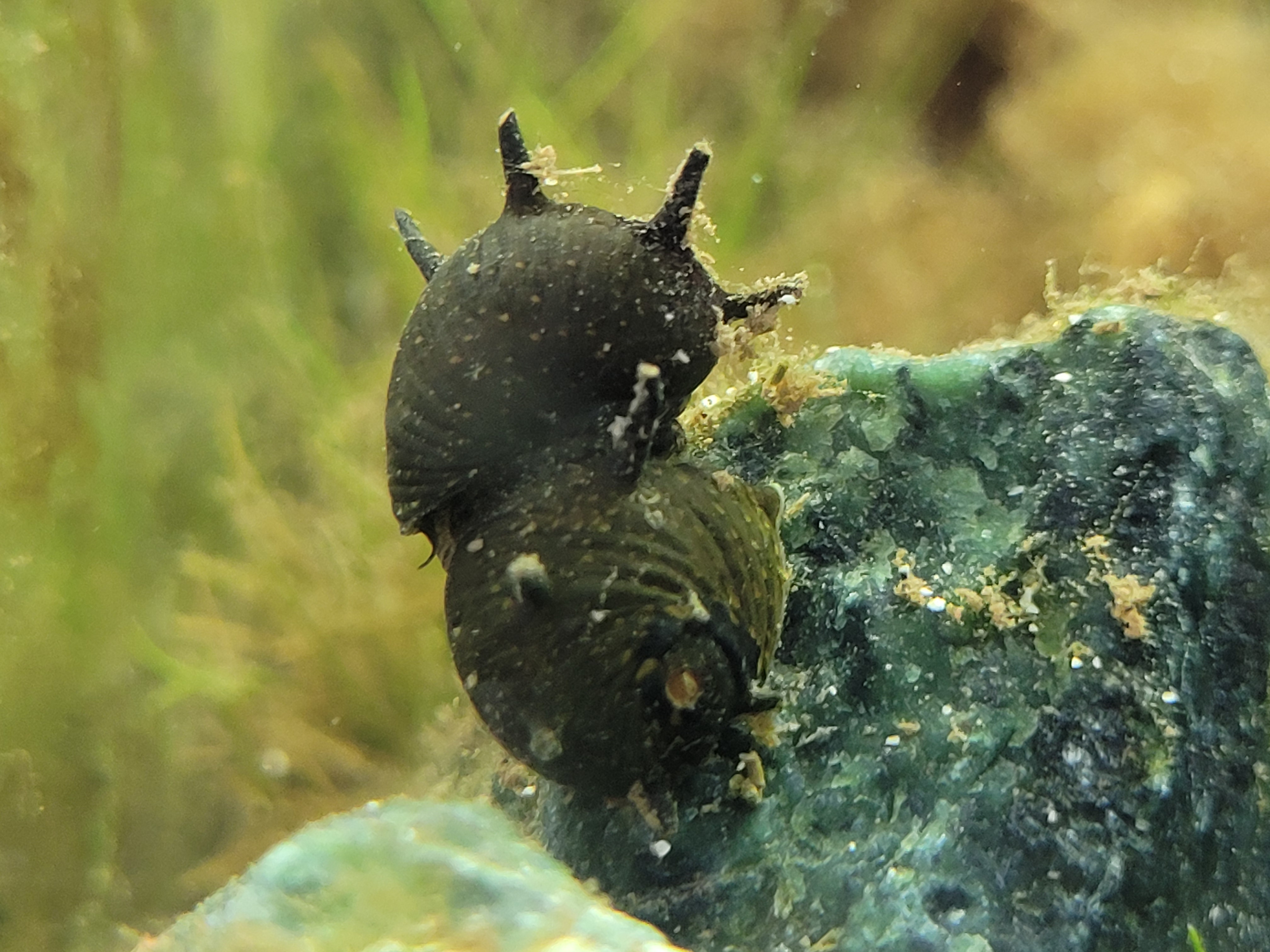
Horned nerite
Clithon corona
Wild range: Southeast Asia (Asia)
At a glance: Horned nerite care
Compiled reference information. Review the care notes and original sources below.
What temperature is listed for Horned nerite?
The compiled profile lists 20.0–28.0 °C for Horned nerite (Clithon corona). Check the original sources below for context and differing recommendations.
What tank size is listed for Horned nerite?
The profile lists a minimum tank volume of 5.3 US gallons (20.0 liters). Volume alone does not establish suitability; consider dimensions, group size and other inhabitants alongside the full care notes.
What pH is listed for Horned nerite?
The compiled profile lists a pH of 6.5–8.0. Review the cited care sources alongside the other water parameters in this profile.
Natural habitat
Horned Nerites inhabit freshwater rivers and streams, typically in areas where there is abundant vegetation and a moderate flow. They prefer soft to moderately hard water with a pH range suitable for freshwater ecosystems.
Where they are found
The species is native to East Asia and is closely associated with freshwater ecosystems, particularly in Japan and Taiwan where it can thrive in various environmental conditions.
Aquarium care
Horned Nerite Snails are relatively easy to care for. They adapt well to a variety of water parameters, but it is essential to maintain a stable nitrogen cycle to avoid stressing them. Providing smooth substrate and suitable decorations can enhance their feeding and living conditions.
Feeding
Horned Nerites are herbivores and primarily feed on algae. They can also benefit from supplementary feeding, such as blanched vegetables like zucchini and spinach, especially when natural algae growth is limited in the aquarium.
Compatibility
Horned Nerite Snails are peaceful and safe with most community tank fish and dwarf shrimp, but they should be kept away from aggressive species such as cichlids, loaches, and crayfish.
Breeding
Breeding Amano Shrimp in captivity can be challenging as they require brackish conditions for their larvae to survive. The adult shrimp should be kept in freshwater, and if you wish to breed, post-larval shrimp will need to be transitioned to brackish water to mature.
Sources
Compiled from multiple independent care sheets — not copied from a single site.