Catalog / fish / Chocolate pencilfish
fish · Lebiasinidae
Chocolate pencilfish
Nannostomus eques
Wild range: Amazon River basin (South America)
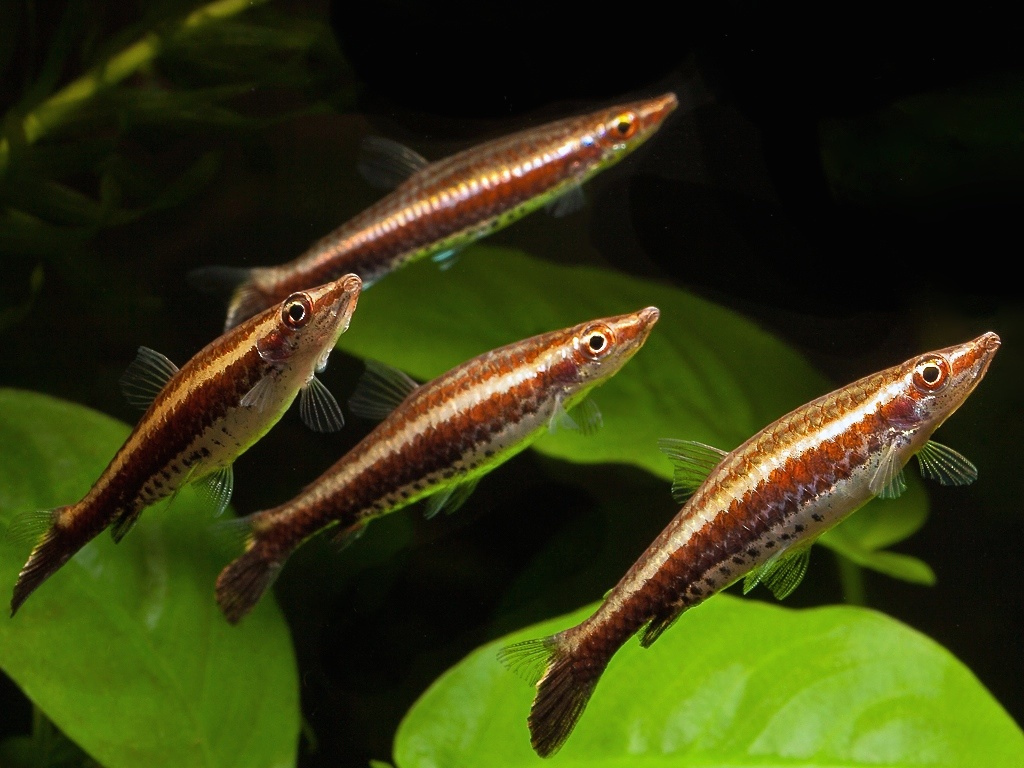
At a glance: Chocolate pencilfish care
Compiled reference information. Review the care notes and original sources below.
What temperature is listed for Chocolate pencilfish?
The compiled profile lists 17.8–28.0 °C for Chocolate pencilfish (Nannostomus eques). Check the original sources below for context and differing recommendations.
What tank size is listed for Chocolate pencilfish?
The profile lists a minimum tank volume of 10.0 US gallons (37.9 liters). Volume alone does not establish suitability; consider dimensions, group size and other inhabitants alongside the full care notes.
What pH is listed for Chocolate pencilfish?
The compiled profile lists a pH of 5.5–7.5. Review the cited care sources alongside the other water parameters in this profile.
Natural habitat
Pencilfish are native to the Amazon River basin, often found schooling above leaf-littered substrates and dense vegetation. Their natural habitat features soft, acidic waters stained with tannins, providing cover and forage opportunities.
Where they are found
These fish have a widespread distribution in South America, particularly in Brazil and Peru. They inhabit tranquil waters with plenty of cover, making them ideal for community tanks with similar-sized peaceful fish.
Aquarium care
Maintaining a school of at least six Brown Pencilfish is recommended to observe their natural behavior. Provide plenty of plant cover and open swimming space, alongside gentle water flow. Regular water changes and careful monitoring of water parameters are crucial for their health.
Feeding
Pencilfish have small mouths and prefer small, floating foods that won't sink quickly. A varied diet is essential, incorporating high-quality flakes or pellets that can be crushed into smaller pieces, supplemented with live foods like brine shrimp and daphnia.
Compatibility
This species is peaceful and compatible with most small community fish. Avoid keeping them with overly aggressive or large fish that may see them as prey.
Breeding
Breeding pencilfish can be achieved in a separate tank with softer, warmer water and plenty of hiding spots such as java moss or spawning mops. It's crucial to provide cover for the eggs, as the parents may consume them. With good care, the eggs will hatch in 1 to 2 days, and the fry will become free swimming shortly after.
Sources
Compiled from multiple independent care sheets — not copied from a single site.