Catalog / fish / Chocolate gourami
fish · Osphronemidae
Chocolate gourami
Sphaerichthys osphromenoides
Wild range: Southeast Asia (Asia)
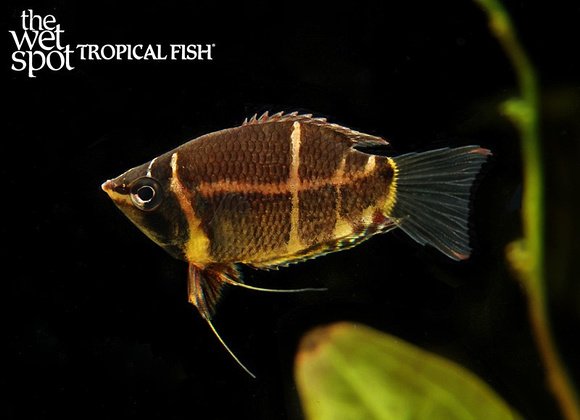
At a glance: Chocolate gourami care
Compiled reference information. Review the care notes and original sources below.
What temperature is listed for Chocolate gourami?
The compiled profile lists 24.0–28.0 °C for Chocolate gourami (Sphaerichthys osphromenoides). Check the original sources below for context and differing recommendations.
What tank size is listed for Chocolate gourami?
The profile lists a minimum tank volume of 10.0 US gallons (40.0 liters). Volume alone does not establish suitability; consider dimensions, group size and other inhabitants alongside the full care notes.
What pH is listed for Chocolate gourami?
The compiled profile lists a pH of 6.0–7.5. Review the cited care sources alongside the other water parameters in this profile.
Natural habitat
Chocolate gouramis inhabit blackwater peat swamps characterized by low light, soft, acidic water, and a dense canopy of vegetation. These habitats provide various hiding spots and a gentle flow that is crucial for their well-being.
Where they are found
This species is endemic to various waterways in Thailand, Cambodia, and Vietnam, where its population can be found in slow-flowing rivers and wetlands heavily vegetated with floating plants.
Aquarium care
To maintain the health of chocolate gouramis, provide them with soft, acidic water (pH 6-6.5) and a stable environment. Aquarists should replicate their natural habitat by ensuring dark-colored water, fine substrates, and gentle filtration. Avoid overcrowding with boisterous tank mates to reduce stress.
Feeding
They thrive on a varied diet, which can include high-quality flake, pellets, and live or frozen foods such as brine shrimp and daphnia. It is important to supplement their diet with plant-based foods.
Compatibility
Chocolate Gouramis are best kept in community tanks with smaller and non-aggressive species. They can be kept with other peaceful fish such as Tetras or Rasboras.
Breeding
Breeding involves conditioning the fish with high-quality live foods, followed by a courtship display. Males carry fertilized eggs in their mouths for incubation. It's recommended to separate the female after a few days to ensure the clutch is safe.
Sources
Compiled from multiple independent care sheets — not copied from a single site.