Catalog / fish / Checkerboard cichlid
fish
Checkerboard cichlid
Dicrossus filamentosus
Wild range: Amazon Basin (South America)
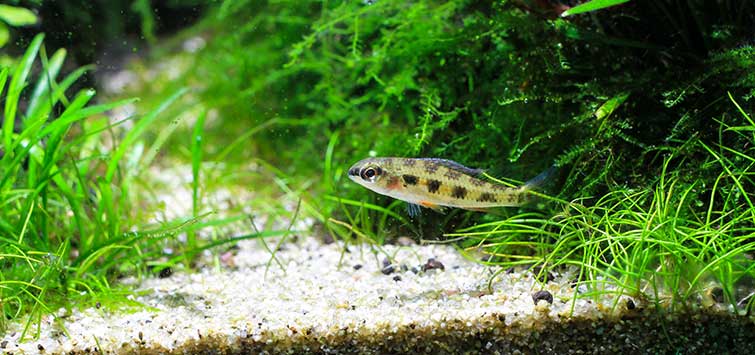
At a glance: Checkerboard cichlid care
Compiled reference information. Review the care notes and original sources below.
What temperature is listed for Checkerboard cichlid?
The compiled profile lists 24.4–30.0 °C for Checkerboard cichlid (Dicrossus filamentosus). Check the original sources below for context and differing recommendations.
What tank size is listed for Checkerboard cichlid?
The profile lists a minimum tank volume of 12.0 US gallons (45.4 liters). Volume alone does not establish suitability; consider dimensions, group size and other inhabitants alongside the full care notes.
What pH is listed for Checkerboard cichlid?
The compiled profile lists a pH of 5.5–7.5. Review the cited care sources alongside the other water parameters in this profile.
Natural habitat
The Checkerboard Dwarf Cichlid inhabits the slow-moving waters of the Amazon Basin, preferring soft, acidic waters rich in leaf litter and submerged vegetation. These cichlids can often be found in small groups amongst dense aquatic vegetation, where they seek cover from predators.
Where they are found
The distribution of the Checkerboard Cichlid is mainly in Colombia and Brazil, specifically within the Orinoco and Negro river basins.
Aquarium care
In captivity, Checkerboard Dwarf Cichlids require a soft, acidic environment with clean, well-filtered water. Regular partial water changes and careful monitoring of water parameters are crucial for their health. They thrive in a planted tank with plenty of hiding spots, and should not be kept with aggressive or larger fish.
Feeding
These cichlids are omnivorous and are known to accept a wide variety of foods. Offer small frozen and prepared foods, including high-quality flake and pellet options, to ensure they receive balanced nutrition.
Compatibility
Although generally peaceful, Checkerboard Cichlids may show aggression towards each other when forming pairs. It is advisable to keep them in groups of five or more to dilute aggression. They can be kept with other peaceful community fish that prefer similar water conditions.
Breeding
They are substrate spawners, often laying eggs in caves or on flat surfaces. Ideal breeding conditions include lower pH and soft water, and they may require specific environmental cues such as changes in temperature or water conditions to trigger spawning.
Sources
Compiled from multiple independent care sheets — not copied from a single site.