Catalog / fish / Celestial pearl danio
fish · Cyprinidae
Celestial pearl danio
Danio margaritatus
Wild range: Southeast Asia (Asia)
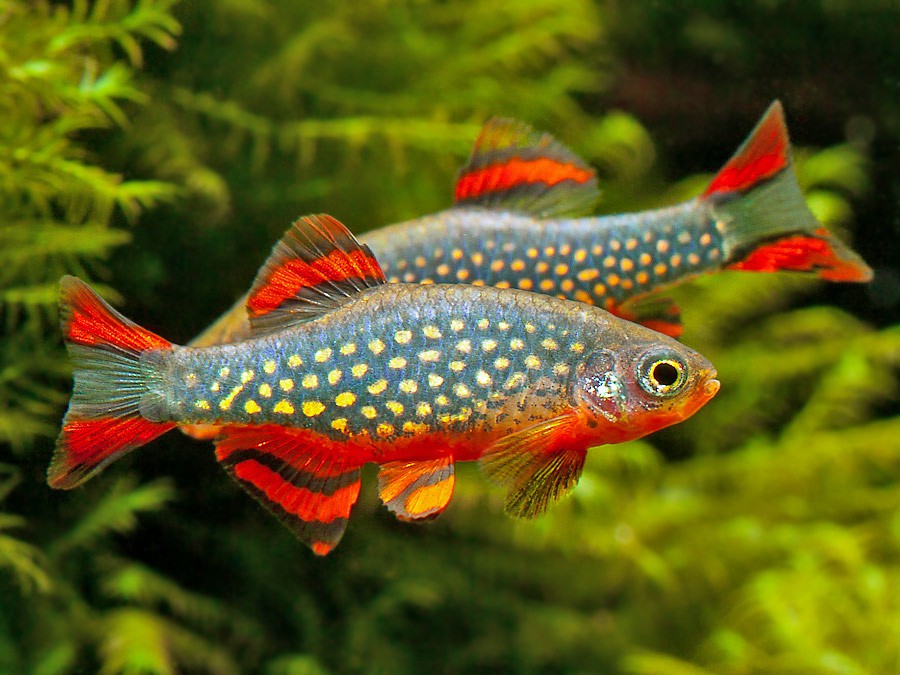
At a glance: Celestial pearl danio care
Compiled reference information. Review the care notes and original sources below.
What temperature is listed for Celestial pearl danio?
The compiled profile lists 18.0–26.1 °C for Celestial pearl danio (Danio margaritatus). Check the original sources below for context and differing recommendations.
What tank size is listed for Celestial pearl danio?
The profile lists a minimum tank volume of 10.0 US gallons (37.9 liters). Volume alone does not establish suitability; consider dimensions, group size and other inhabitants alongside the full care notes.
What pH is listed for Celestial pearl danio?
The compiled profile lists a pH of 6.5–7.8. Review the cited care sources alongside the other water parameters in this profile.
Natural habitat
Celestial Pearl Danios inhabit shallow waters with abundant vegetation and floating plants, found in rivers and streams in Myanmar. They prefer areas with moderate water flow and plenty of natural cover, which provides both food sources and safety from predators.
Where they are found
These fish inhabit lush, aquatic environments in rice paddies and stream systems, often in schools where they utilize vegetation for cover from predators.
Aquarium care
To maintain healthy Celestial Pearl Danios, ensure a stable water temperature and quality. Perform weekly water changes to keep ammonia and nitrite levels low; they are sensitive to poor water conditions. Provide adequate hiding spots with plants and driftwood to mimic their natural habitat.
Feeding
As omnivores, Celestial Pearl Danios enjoy a varied diet. They thrive on high-quality flake food, live foods such as daphnia, and vegetable matter. Ensure their diet includes both protein and plant-based foods to maintain their health.
Compatibility
Celestial Pearl Danios are peaceful and do well in community tanks. Ideal tank mates include other small, non-aggressive species like Neon Tetras or Guppies. Avoid larger or more aggressive fish, as they may intimidate these shy creatures.
Breeding
Breeding is relatively straightforward; provide a planted tank with fine-leaved plants to catch eggs. Separate breeding pairs may require a separate tank to protect fry from adult fish. The parents may eat the eggs, so it's beneficial to remove them after spawning.
Sources
Compiled from multiple independent care sheets — not copied from a single site.