Catalog / fish / Cardinal tetra
fish · Characidae
Cardinal tetra
Paracheirodon axelrodi
Wild range: Amazon Basin (South America)
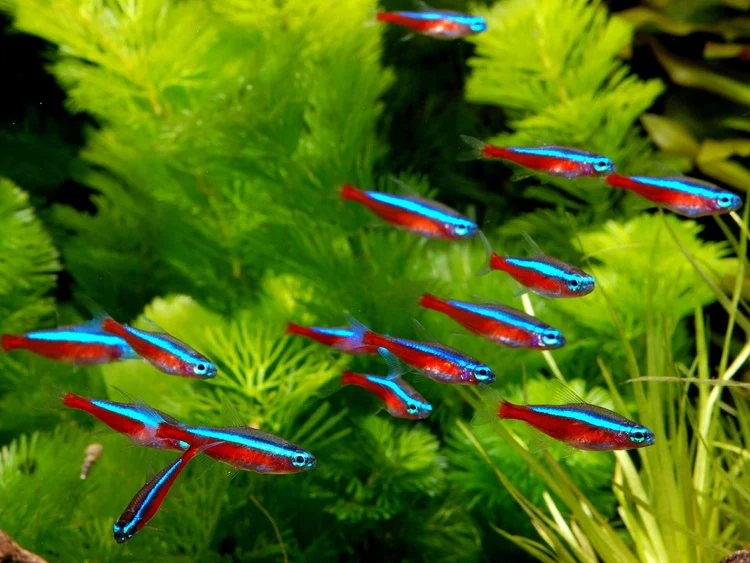
At a glance: Cardinal tetra care
Compiled reference information. Review the care notes and original sources below.
What temperature is listed for Cardinal tetra?
The compiled profile lists 22.7–27.8 °C for Cardinal tetra (Paracheirodon axelrodi). Check the original sources below for context and differing recommendations.
What tank size is listed for Cardinal tetra?
The profile lists a minimum tank volume of 10.0 US gallons (37.9 liters). Volume alone does not establish suitability; consider dimensions, group size and other inhabitants alongside the full care notes.
What pH is listed for Cardinal tetra?
The compiled profile lists a pH of 5.5–7.0. Review the cited care sources alongside the other water parameters in this profile.
Natural habitat
The Cardinal Tetra is native to the Amazon Basin, primarily found in slow-moving rivers and streams that are rich in vegetation. Their natural habitat is characterized by dark waters with high tannin content and organic debris, which creates a soft and acidic environment ideal for their growth and comfort.
Where they are found
Cardinal Tetras are predominantly found in the Amazon River Basin, particularly in Brazil, where they are often observed in groups around submerged structures and plants.
Aquarium care
For optimal care, provide a well-planted aquarium with gentle filtration. Tannins can be added to mimic natural conditions, and water should be kept soft and slightly acidic. Regular water changes and a varied diet will keep them healthy and stress-free.
Feeding
A varied diet including high-quality flake foods, sinking micro pellets, and occasional frozen foods like bloodworms, brine shrimp, and daphnia is recommended to promote vibrant colors and strong immune function.
Compatibility
Cardinal Tetras are peaceful and should be kept with other non-aggressive species. They do best in schools and can be housed with similar-sized tetras and non-predatory fish.
Breeding
Breeding requires slightly acidic water and dense vegetation for the eggs to be hidden. After spawning, remove adults as they may consume the eggs. The fry are sensitive and require care, with infusoria or finely crushed flakes suitable for feeding initially.
Sources
Compiled from multiple independent care sheets — not copied from a single site.