fish · Cichlidae
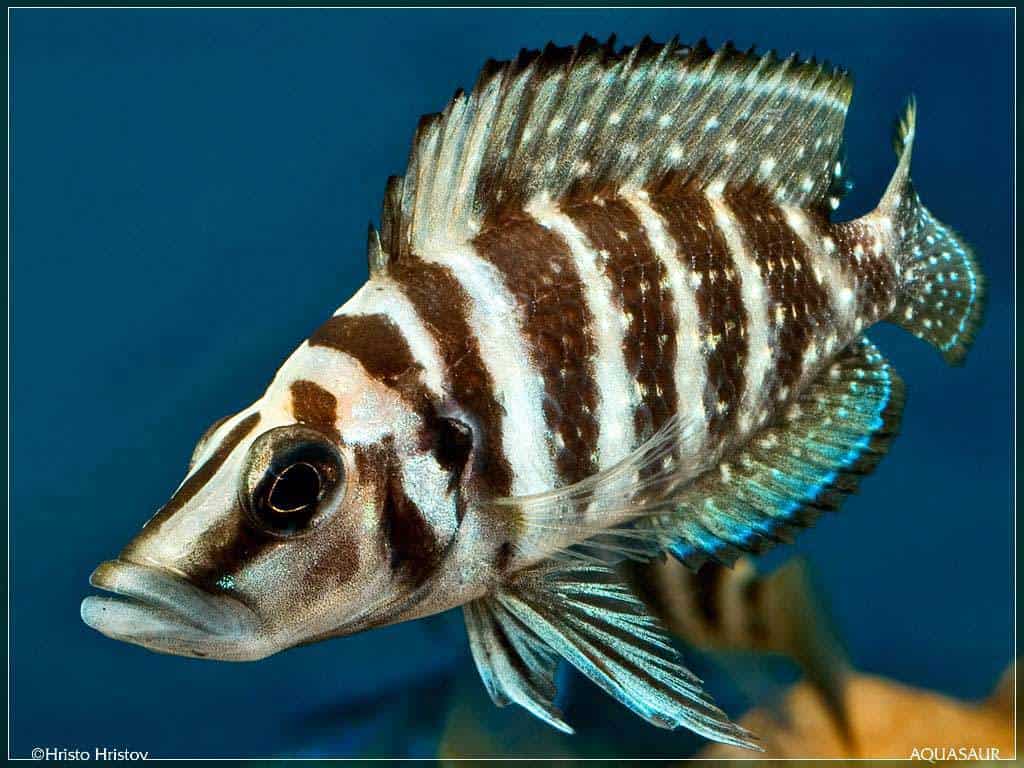
Calvus
Altolamprologus calvus
Wild range: Lake Tanganyika (Africa)
At a glance: Calvus care
Compiled reference information. Review the care notes and original sources below.
What temperature is listed for Calvus?
The compiled profile lists 23.0–28.0 °C for Calvus (Altolamprologus calvus). Check the original sources below for context and differing recommendations.
What tank size is listed for Calvus?
The profile lists a minimum tank volume of 45.0 US gallons (170.0 liters). Volume alone does not establish suitability; consider dimensions, group size and other inhabitants alongside the full care notes.
What pH is listed for Calvus?
The compiled profile lists a pH of 7.5–9.0. Review the cited care sources alongside the other water parameters in this profile.
Natural habitat
The Calvus cichlid is found in the rocky areas of Lake Tanganyika, preferring depths between 10 to 50 meters. They inhabit caves and crevices which provide shelter and breeding sites. The water in this region is well-oxygenated and typically alkaline, with a high mineral content.
Where they are found
Altolamprologus calvus is endemic to Lake Tanganyika, mainly distributed along its rocky shorelines and is adapted to the unique environmental conditions of this ancient lake.
Aquarium care
Provide ample caves and hiding spaces to make the fish feel secure. Stability in water parameters is crucial, as these fish are sensitive to changes. Regular water changes and a well-maintained filtration system will promote a healthy environment.
Feeding
Calvus cichlids are omnivores and can be fed a varied diet of high-quality flakes, pellets, and live or frozen foods such as brine shrimp and bloodworms. It's advisable to include vegetable matter and spirulina to ensure a balanced diet.
Compatibility
While generally peaceful, Calvus can be territorial, especially during breeding. They can coexist with other Tanganyikan cichlids like shell dwellers, but caution should be taken with species that may be more aggressive. It's best to introduce tank mates when the Calvus are young or once the tank is established.
Breeding
They are mouthbrooders; males will court females by displaying and dancing in front of them. Once a pair forms, the female will lay eggs in a cave, which she will then incubate in her mouth until they are free-swimming fry. Provide plenty of hiding spots and smooth surfaces for breeding.
Sources
Compiled from multiple independent care sheets — not copied from a single site.