Catalog / fish / Butterfly goodeid
fish · Goodeidae
Butterfly goodeid
Ameca splendens
Wild range: Mexico (North America)
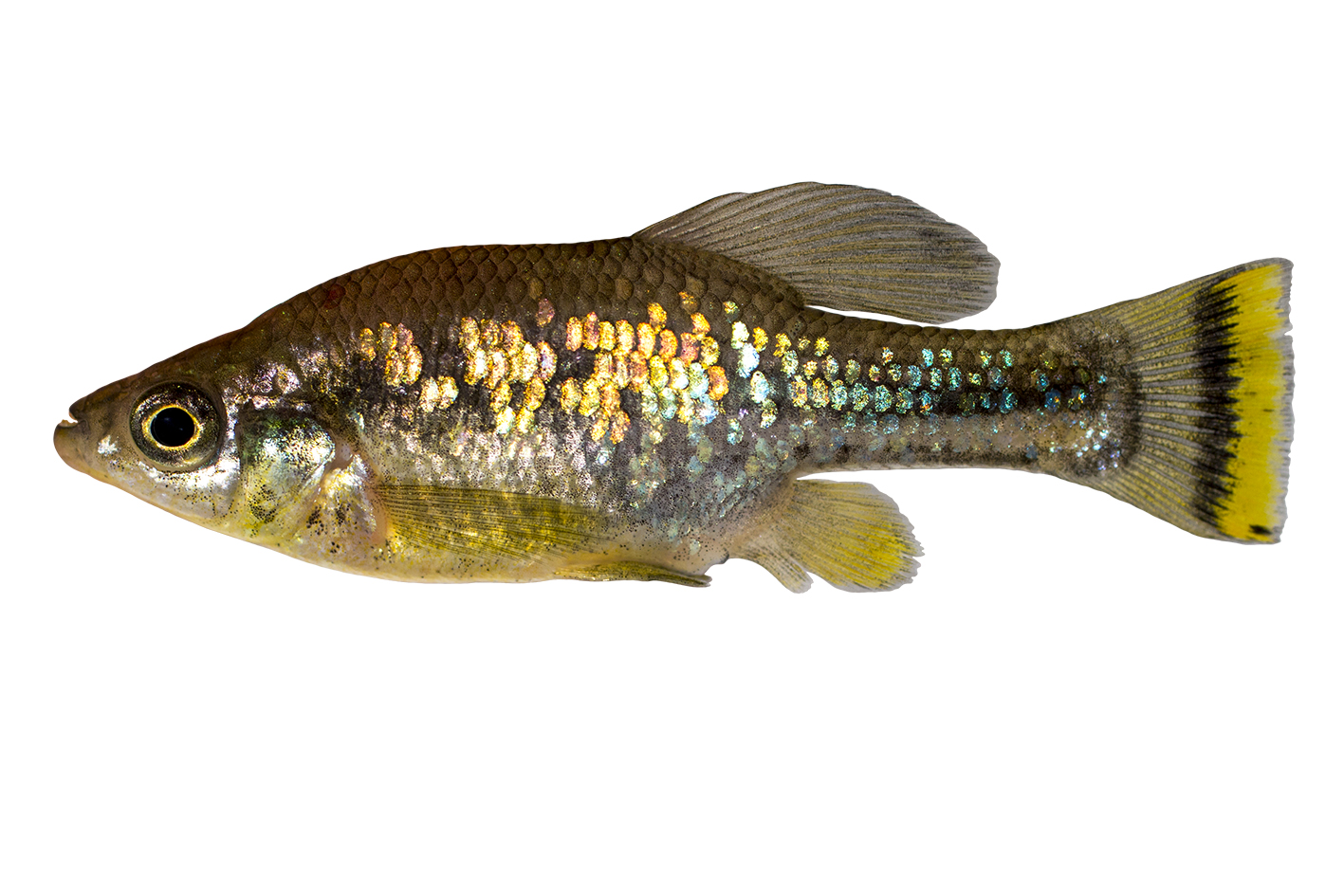
At a glance: Butterfly goodeid care
Compiled reference information. Review the care notes and original sources below.
What temperature is listed for Butterfly goodeid?
The compiled profile lists 21.1–25.6 °C for Butterfly goodeid (Ameca splendens). Check the original sources below for context and differing recommendations.
What tank size is listed for Butterfly goodeid?
The profile lists a minimum tank volume of 20.0 US gallons (75.7 liters). Volume alone does not establish suitability; consider dimensions, group size and other inhabitants alongside the full care notes.
What pH is listed for Butterfly goodeid?
The compiled profile lists a pH of 6.0–8.0. Review the cited care sources alongside the other water parameters in this profile.
Natural habitat
Ameca splendens is endemic to freshwater lakes and streams in Mexico, primarily inhabiting areas with ample vegetation.
Where they are found
Historically thought to be possibly extinct in the wild, the Butterfly Goodeid is now primarily kept by specialty hobbyists.
Aquarium care
This species thrives in a well-planted aquarium setup with moderate water flow. They require a minimum tank size of 75.71 liters and should be kept in groups to promote their social behavior. The tank should be carefully maintained to keep water parameters stable, particularly pH and hardness.
Feeding
They have an omnivorous diet that must include a vegetable component, alongside occasional live food like baby brine shrimp. They also seem to consume algae-eating shrimp.
Compatibility
Generally peaceful, they can exhibit semi-aggressive behaviors, especially towards smaller fish. Keeping them in proper group sizes can help mitigate aggressive behavior.
Breeding
Breeding is straightforward, as they are livebearers. Females give birth to fully formed fry after a gestation period of 55-60 days. Males and females can be identified easily by their size and color differences, with males being more vibrantly colored.
Sources
Compiled from multiple independent care sheets — not copied from a single site.