Catalog / fish / Betta burdigala
fish · Osphronemidae
Betta burdigala
Betta burdigala
Wild range: Southeast Asia (Asia)
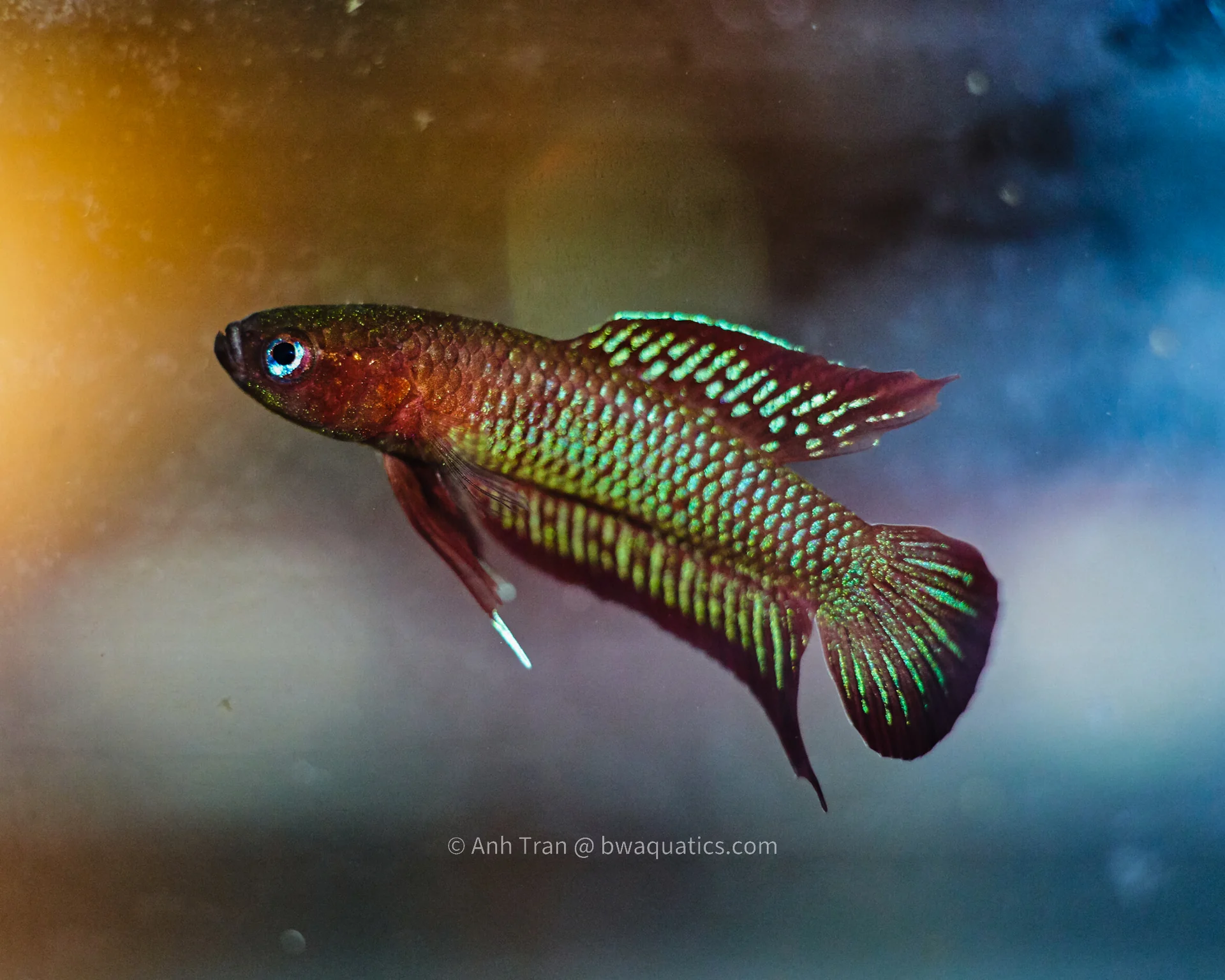
At a glance: Betta burdigala care
Compiled reference information. Review the care notes and original sources below.
What temperature is listed for Betta burdigala?
The compiled profile lists 24.0–30.0 °C for Betta burdigala (Betta burdigala). Check the original sources below for context and differing recommendations.
What tank size is listed for Betta burdigala?
The profile lists a minimum tank volume of 5.0 US gallons (19.0 liters). Volume alone does not establish suitability; consider dimensions, group size and other inhabitants alongside the full care notes.
What pH is listed for Betta burdigala?
The compiled profile lists a pH of 3.0–8.0. Review the cited care sources alongside the other water parameters in this profile.
Natural habitat
Betta burdigala hails from the shadowed peat-swamp forests of western Indonesia, where streams are stained by fallen leaves and sunlight is minimal. The species is known for its quiet, striking wine-red coloration, complemented by subtle metallic sheens.
Where they are found
This species is native to Indonesia and Malaysia, primarily inhabiting shallow, warm waters with moderate vegetation.
Aquarium care
For aquarium care, providing a tank with soft, slightly acidic water conditions is essential. Include a bare bottom or soft substrate, with adequate driftwood and Indian almond leaves to replicate natural conditions. Frequent water changes will ensure a healthy environment, as these fish prefer clean water.
Feeding
In captivity, provide small live and frozen foods like daphnia, mosquito larvae, and brine shrimp. Quality micro-pellets formulated for carnivorous fish are also suitable.
Compatibility
While often kept alone or in breeding pairs, Betta burdigala can be aggressive towards their own species or others, especially males. Care should be taken when considering tank mates to ensure a peaceful community.
Breeding
Breeding this species involves creating a separate breeding tank with calm waters and plenty of vegetation. The males will build bubble nests, and after fertilization, they will care for the eggs until they hatch.
Sources
Compiled from multiple independent care sheets — not copied from a single site.