Catalog / fish / Princess of Burundi
fish · Cichlidae
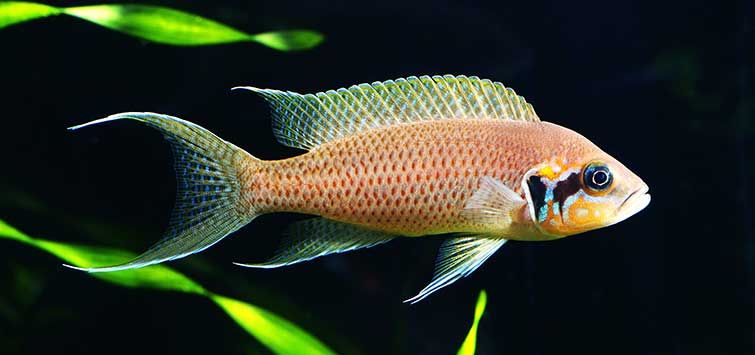
Princess of Burundi
Neolamprologus brichardi
Wild range: Lake Tanganyika (Africa)
At a glance: Princess of Burundi care
Compiled reference information. Review the care notes and original sources below.
What temperature is listed for Princess of Burundi?
The compiled profile lists 24.4–27.8 °C for Princess of Burundi (Neolamprologus brichardi). Check the original sources below for context and differing recommendations.
What tank size is listed for Princess of Burundi?
The profile lists a minimum tank volume of 25.0 US gallons (95.0 liters). Volume alone does not establish suitability; consider dimensions, group size and other inhabitants alongside the full care notes.
What pH is listed for Princess of Burundi?
The compiled profile lists a pH of 7.5–9.2. Review the cited care sources alongside the other water parameters in this profile.
Natural habitat
The Princess of Burundi inhabits the rocky shores of Lake Tanganyika, thriving in hard, well-oxygenated waters. These environments feature caves and crevices which serve as breeding and hiding areas.
Where they are found
Fairy cichlids are endemic to Lake Tanganyika, where they are found mainly in coastal regions with a variety of substrates, including rocks and sand. These conditions are crucial for their breeding and territorial strategies.
Aquarium care
In captivity, ensure stable water conditions to minimize stress, and provide ample hiding spaces using rocks or caves. Regular water changes and proper filtration are crucial in maintaining water quality.
Feeding
The diet should include a variety of flake foods, pellets, frozen blood worms, and brine shrimp. The inclusion of earth worm flakes can promote breeding behavior.
Compatibility
Caution is advised in community tanks; they are compatible with similarly-sized and temperamented cichlids. Avoid mixing with overly aggressive species.
Breeding
Breeding fairy cichlids can be a rewarding experience. They often show communal care for their young in spacious tanks. Generally, they spawn in crevices or on flat surfaces within their territory, with females being particularly attentive to the eggs and larvae.
Sources
Compiled from multiple independent care sheets — not copied from a single site.