Catalog / fish / Umbrella apistogramma
fish · Cichlidae
Umbrella apistogramma
Apistogramma borellii
Wild range: Rio Paraguay system (South America)
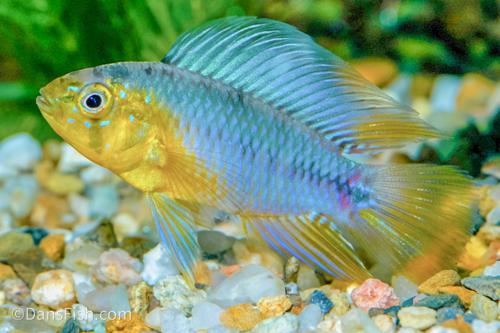
At a glance: Umbrella apistogramma care
Compiled reference information. Review the care notes and original sources below.
What temperature is listed for Umbrella apistogramma?
The compiled profile lists 12.0–28.0 °C for Umbrella apistogramma (Apistogramma borellii). Check the original sources below for context and differing recommendations.
What tank size is listed for Umbrella apistogramma?
The profile lists a minimum tank volume of 18.5 US gallons (70.0 liters). Volume alone does not establish suitability; consider dimensions, group size and other inhabitants alongside the full care notes.
What pH is listed for Umbrella apistogramma?
The compiled profile lists a pH of 5.0–8.0. Review the cited care sources alongside the other water parameters in this profile.
Natural habitat
Apistogramma borellii is found in a variety of freshwater habitats, including streams, rivers, lakes, and lagoons. These environments offer plenty of cover which is ideal for their natural behavior. This species is often located near the margins of these water bodies, thriving in varied conditions that range from soft to moderately hard water.
Where they are found
This species thrives in various freshwater habitats, predominantly in regions with plenty of hiding spots among rocks and plants. They prefer slightly acidic to neutral pH and moderate to soft water conditions.
Aquarium care
To create an ideal environment for Apistogramma agassizii, a 76-liter (20-gallon) tank or larger is recommended, with gentle filtration and a soft substrate like fine sand. Include plenty of caves and hiding places, ideally made from rocks or driftwood, along with live plants to provide shelter and minimize aggression during breeding.
Feeding
Efficient feeding of Apistogramma borellii involves a varied diet that includes both live and frozen foods, such as brine shrimp and daphnia, as well as quality flakes and pellets. They are generally not picky and will accept most foods offered to them. Providing a balanced diet is crucial to achieving their vibrant colors and overall health.
Compatibility
They are generally peaceful with other community fish, especially those that occupy the mid to top areas of the tank. Tankmates should be chosen carefully to avoid conflicts over territory, particularly with similar-sized or semi-aggressive species.
Breeding
Breeding Beani Cichlids can be a rewarding endeavor. They are ovoviviparous, meaning the female holds fertilized eggs until they hatch. It is best to provide them with a separate breeding tank, where they can lay eggs on flat surfaces or slate. The parents can exhibit protective behavior towards the fry, so adequate hiding spots are crucial.
Sources
Compiled from multiple independent care sheets — not copied from a single site.