Catalog / plants / Japanese blyxa
plant · Hydrocharitaceae
Japanese blyxa
Blyxa japonica
Wild range: Southeast Asia (Asia)
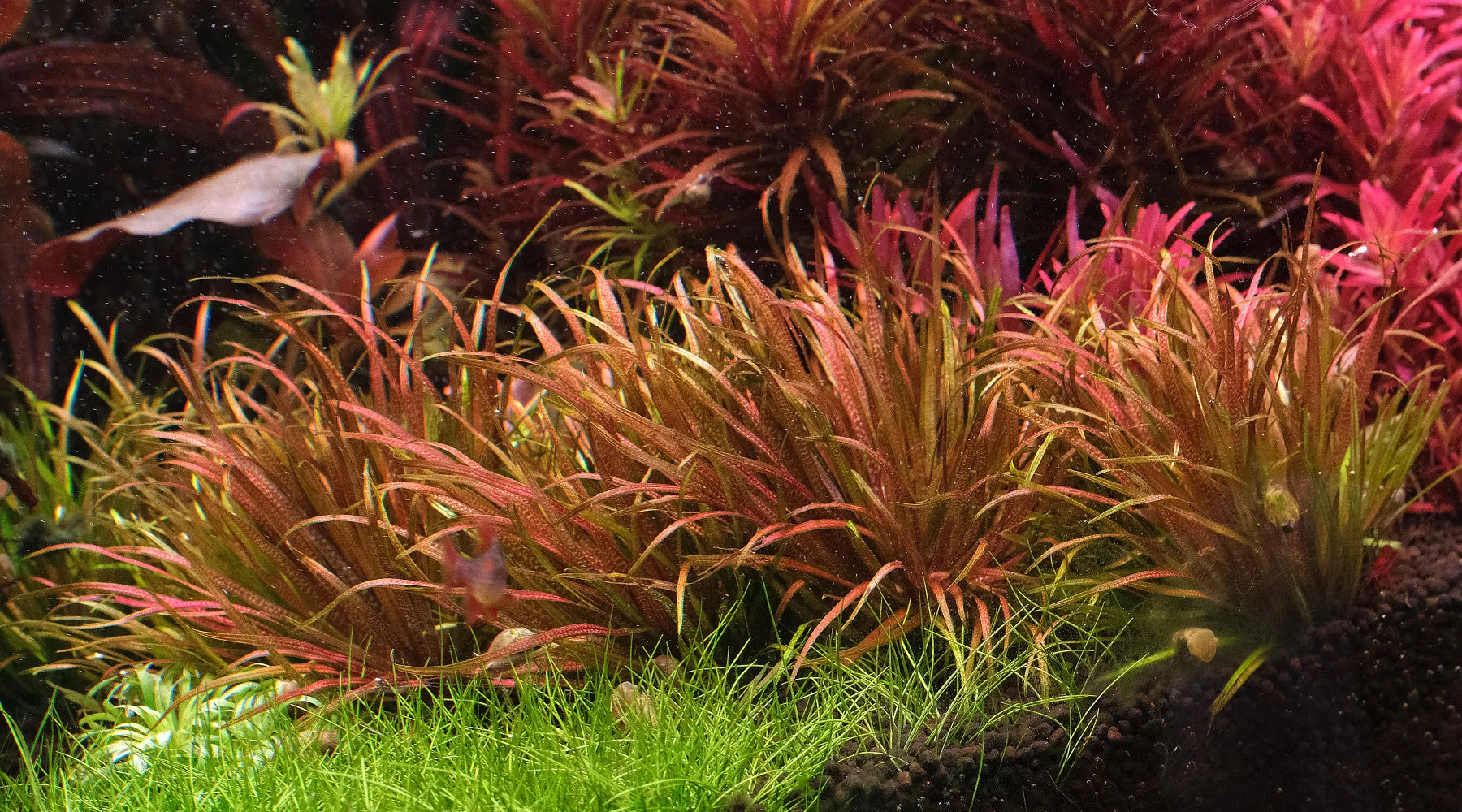
At a glance: Japanese blyxa care
Compiled reference information. Review the care notes and original sources below.
What temperature is listed for Japanese blyxa?
The compiled profile lists 22.0–28.0 °C for Japanese blyxa (Blyxa japonica). Check the original sources below for context and differing recommendations.
What tank size is listed for Japanese blyxa?
The profile lists a minimum tank volume of 14.3 US gallons (54.0 liters). Volume alone does not establish suitability; consider dimensions, group size and other inhabitants alongside the full care notes.
What pH is listed for Japanese blyxa?
The compiled profile lists a pH of 6.0–7.5. Review the cited care sources alongside the other water parameters in this profile.
Natural habitat
Blyxa japonica is commonly found in shallow areas of freshwater rivers and lakes in Southeast Asia, thriving in soft, nutrient-rich substrates. It prefers stable conditions without strong currents or significant water movement.
Where they are found
This species is native to countries like Japan, China, and Taiwan, where it can be found in its natural habitat within various aquatic ecosystems.
Aquarium care
In an aquarium setting, ensure moderate lighting and a nutrient-rich substrate for optimal growth. Regular water changes and maintenance of stable water parameters will help keep the plant healthy.
Feeding
Blyxa japonica benefits from a well-aerated substrate and can absorb nutrients directly through its roots, requiring little additional feeding beyond normal aquarium upkeep.
Compatibility
Blyxa japonica is generally compatible with peaceful fish species and other aquatic plants, making it a great addition to community tanks.
Breeding
The plant propagates easily by removing side stems and planting them directly back into the substrate. Ensure that the conditions remain stable to allow for successful rooting.
Sources
Compiled from multiple independent care sheets — not copied from a single site.