Catalog / invertebrates / Blue moon crayfish
invertebrate · Parastacidae
Blue moon crayfish
Cherax boesemani
Wild range: New Guinea (Australia)
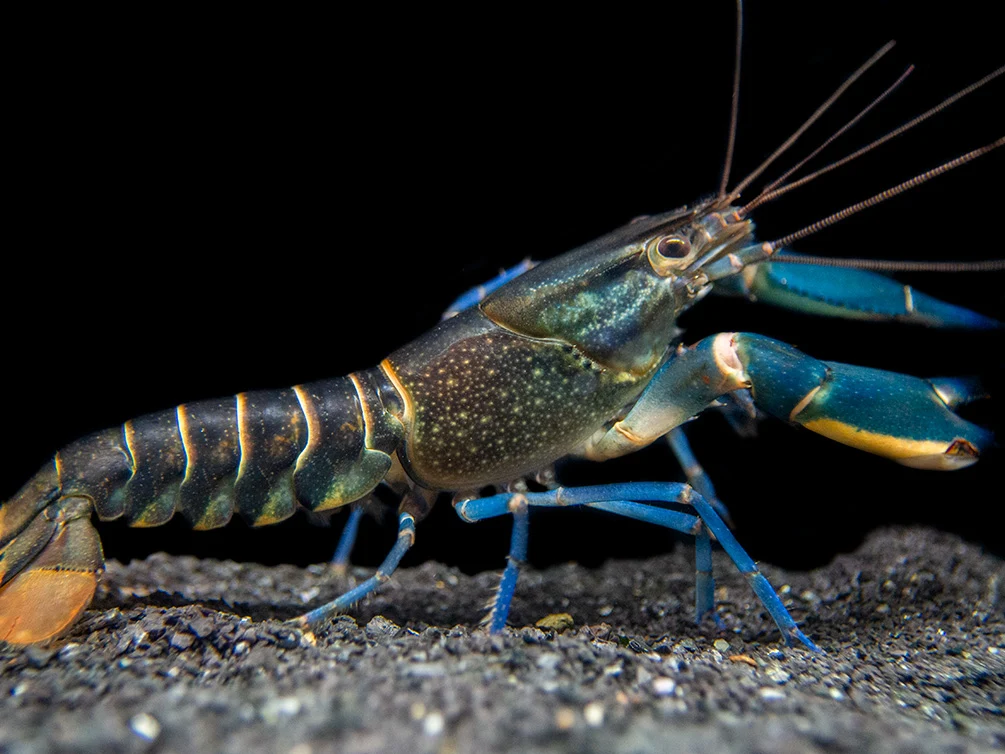
At a glance: Blue moon crayfish care
Compiled reference information. Review the care notes and original sources below.
What temperature is listed for Blue moon crayfish?
The compiled profile lists 22.0–28.0 °C for Blue moon crayfish (Cherax boesemani). Check the original sources below for context and differing recommendations.
What tank size is listed for Blue moon crayfish?
The profile lists a minimum tank volume of 5.0 US gallons (20.0 liters). Volume alone does not establish suitability; consider dimensions, group size and other inhabitants alongside the full care notes.
What pH is listed for Blue moon crayfish?
The compiled profile lists a pH of 6.5–8.0. Review the cited care sources alongside the other water parameters in this profile.
Natural habitat
The Blue Moon Crayfish is native to the Teminabuan region of the Kepala Burung Peninsula in West Papua, Indonesia. It inhabits freshwater environments where it can find shelter among rocks and dense vegetation.
Where they are found
This species is found in specific areas of West Papua, primarily in the Kais River drainage, highlighting its limited natural range.
Aquarium care
Cherry shrimp are relatively easy to care for, requiring a well-maintained aquarium with stable water parameters. Regular water changes and a balanced diet will help to keep them healthy and encourage breeding. They thrive in heavily planted tanks with plenty of hiding spaces to feel safe.
Feeding
The Blue Moon Crayfish is an omnivore and accepts a variety of foods including high-quality pellets, vegetables, and protein sources such as shrimp or fish.
Compatibility
Considered peaceful creatures, Cherry Shrimp are generally safe with other small fish and invertebrates. However, they may be at risk in tanks with larger, more aggressive fish species that may see them as food.
Breeding
Breeding requires proper space and conditions. Females carry eggs under their tail until they are ready to hatch, typically requiring warmer temperatures and good water quality.
Sources
Compiled from multiple independent care sheets — not copied from a single site.