fish · Nothobranchiidae
Blue gularis
Fundulopanchax sjoestedti
Wild range: West Africa (Africa)
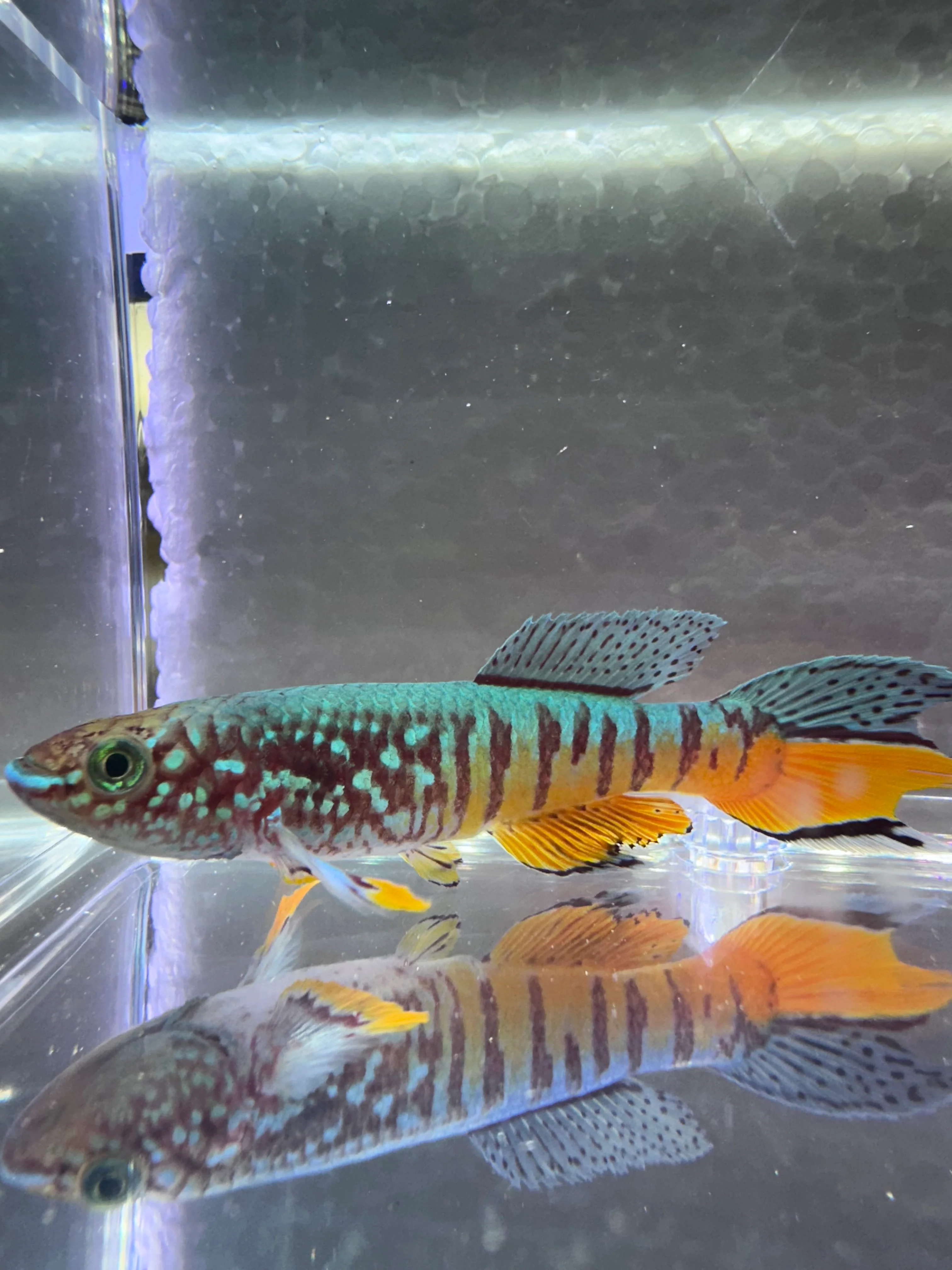
At a glance: Blue gularis care
Compiled reference information. Review the care notes and original sources below.
What temperature is listed for Blue gularis?
The compiled profile lists 22.0–26.1 °C for Blue gularis (Fundulopanchax sjoestedti). Check the original sources below for context and differing recommendations.
What tank size is listed for Blue gularis?
The profile lists a minimum tank volume of 20.0 US gallons (75.0 liters). Volume alone does not establish suitability; consider dimensions, group size and other inhabitants alongside the full care notes.
What pH is listed for Blue gularis?
The compiled profile lists a pH of 6.0–8.0. Review the cited care sources alongside the other water parameters in this profile.
Natural habitat
The Blue Gularis is native to West Africa, specifically found in rivers and streams of Sierra Leone and Western Liberia. Their habitat is characterized by soft, slightly acidic to neutral waters, abundant vegetation, and a slow water flow, providing plenty of hiding spots and spawning substrates. Mimicking these conditions is crucial for their well-being in an aquarium setup.
Where they are found
Native to Nigeria and Cameroon, this species is often found in shallow waters where vegetation is abundant and water conditions are stable.
Aquarium care
To successfully care for Blue Gularis, ensure a minimum tank size of 75 liters, use a soft sandy substrate, and include ample vegetation for cover. Water conditions should be maintained within a temperature range of 22-26 °C, with a pH of 6.0-7.5 and hardness of 4-18°N. Regular water changes and monitoring parameters are important to keep them healthy.
Feeding
The Blue Gularis Killifish thrives on a diet of live or frozen foods including blackworms, bloodworms, daphnia, and brine shrimp. While they can eat prepared foods, these should only supplement their diet, not replace it.
Compatibility
While they can be kept in community tanks, they should not be housed with smaller fish such as guppies, as they may be seen as prey. They prefer a biotope-style environment where they are housed with other similarly sized species.
Breeding
Breeding Blue Gularis requires a dedicated breeding tank with soft, slightly acidic water and a peat moss substrate. After spawning, remove the peat to protect the eggs and incubate them in damp conditions. Maintain an optimal temperature of 23-25°C. A male-to-female ratio of 1:2 is recommended to mitigate aggressive behavior.
Sources
Compiled from multiple independent care sheets — not copied from a single site.