Catalog / fish / Bleeding heart tetra
fish · Characidae
Bleeding heart tetra
Hyphessobrycon erythrostigma
Wild range: Upper Amazon Basin (South America)
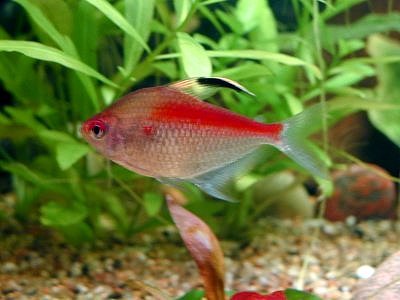
At a glance: Bleeding heart tetra care
Compiled reference information. Review the care notes and original sources below.
What temperature is listed for Bleeding heart tetra?
The compiled profile lists 22.0–28.0 °C for Bleeding heart tetra (Hyphessobrycon erythrostigma). Check the original sources below for context and differing recommendations.
What tank size is listed for Bleeding heart tetra?
The profile lists a minimum tank volume of 10.0 US gallons (38.0 liters). Volume alone does not establish suitability; consider dimensions, group size and other inhabitants alongside the full care notes.
What pH is listed for Bleeding heart tetra?
The compiled profile lists a pH of 4.0–7.5. Review the cited care sources alongside the other water parameters in this profile.
Natural habitat
Bleeding heart tetras inhabit slow-moving rivers and streams in the Upper Amazon Basin, often found in areas with ample vegetation, leaf litter, and driftwood. They thrive in densely planted environments where they can find ample hiding places and cover.
Where they are found
This species can be found along the borders of Peru, Brazil, and Colombia, within the Amazon basin's lush environments. They prefer areas where the water is plentiful with vegetation and organic material, reflecting their natural tendency to school in gentle currents.
Aquarium care
Bleeding Heart Tetras thrive in a minimum 38-liter (10-gallon) aquarium, but a larger space is encouraged for a proper shoal. They require a stable, biologically balanced aquarium environment, with regular water changes to maintain quality.
Feeding
Bleeding heart tetras are omnivorous and will happily consume high-quality pellets, flakes, and a variety of live or frozen foods. Offering brine shrimp and bloodworms can enhance their diet, and plant-based foods can be given occasionally for variety. Feed several times a day but ensure they consume all food within three minutes to prevent overfeeding.
Compatibility
These tetras are peaceful and make excellent additions to community tanks with other similarly temperate fish, especially other species of tetras. They prefer to be in groups of at least six to feel secure.
Breeding
Breeding Bleeding Heart Tetras can be accomplished in a separate breeding tank, where they will spawn on flat surfaces or plants. The eggs are adhesive and will hatch within a few days under optimal conditions. The parents should be removed after spawning to avoid eating the eggs.
Sources
Compiled from multiple independent care sheets — not copied from a single site.