Catalog / invertebrates / Bladder snail
invertebrate · Planorbidae
Bladder snail
Physella acuta
Wild range: Eastern North America (North America)
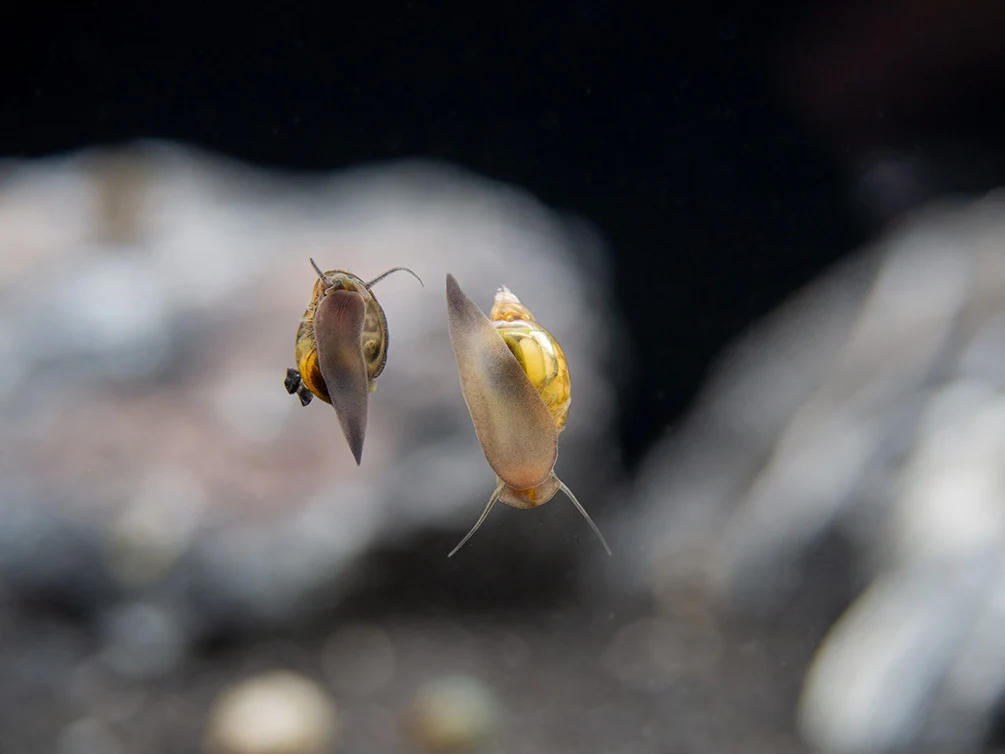
At a glance: Bladder snail care
Compiled reference information. Review the care notes and original sources below.
What temperature is listed for Bladder snail?
The compiled profile lists 15.0–30.0 °C for Bladder snail (Physella acuta). Check the original sources below for context and differing recommendations.
What tank size is listed for Bladder snail?
The profile lists a minimum tank volume of 2.6 US gallons (10.0 liters). Volume alone does not establish suitability; consider dimensions, group size and other inhabitants alongside the full care notes.
What pH is listed for Bladder snail?
The compiled profile lists a pH of 6.5–8.5. Review the cited care sources alongside the other water parameters in this profile.
Natural habitat
Bladder snails are commonly found in various freshwater habitats including ponds, lakes, and streams. They thrive in environments with a moderate plant presence, which provides both food and hiding spots. Their ability to breathe air from the water surface allows them to inhabit areas with varying oxygen levels and adapt to different water conditions.
Where they are found
Originally native to North America, bladder snails have been introduced in multiple regions worldwide, often appearing as unintended hitchhikers in planted aquariums. Their rapid reproduction and adaptability have allowed them to thrive in a variety of habitats, leading to their common presence in aquarium setups.
Aquarium care
In captivity, bladder snails require a well-maintained aquarium with stable parameters. They thrive in tanks with gentle filtration to avoid being sucked into the filter. Keeping the substrate clean will help control their population levels, as excessive debris can lead to overpopulation.
Feeding
Bladder snails primarily consume algae, dead plant matter, and organic waste, contributing to the overall health of the aquarium by helping to clean detritus. While they produce waste, their herbivorous diet results in lower ammonia levels compared to carnivorous species.
Compatibility
Bladder snails are compatible with peaceful community fish and invertebrates. They can coexist with species like Tetras and Corydoras without issues. However, avoid keeping them with known snail-eating species such as certain Loaches and Puffers, which can cause stress and population decline.
Breeding
Bladder snails reproduce rapidly, being hermaphroditic and capable of self-fertilization. You may observe a rapid increase in their population if conditions are right, so keeping an eye on their numbers is essential for tank maintenance.
Sources
Compiled from multiple independent care sheets — not copied from a single site.